Fiebing's Edge Kote (4oz) - Black - Flexible, Water Resistant Coating for Leather Edges, Medium Gloss Review (2026)
Updated September 14, 2026 · Research-based review
Our verdict
A flexible, water resistant edge coating that gives raw leather edges a clean, medium gloss black finish and bends without cracking on belts and straps. It needs a few thin coats to build a smooth result and can crack if applied too heavily, but for finishing natural leather edges it is a dependable, long standing choice.
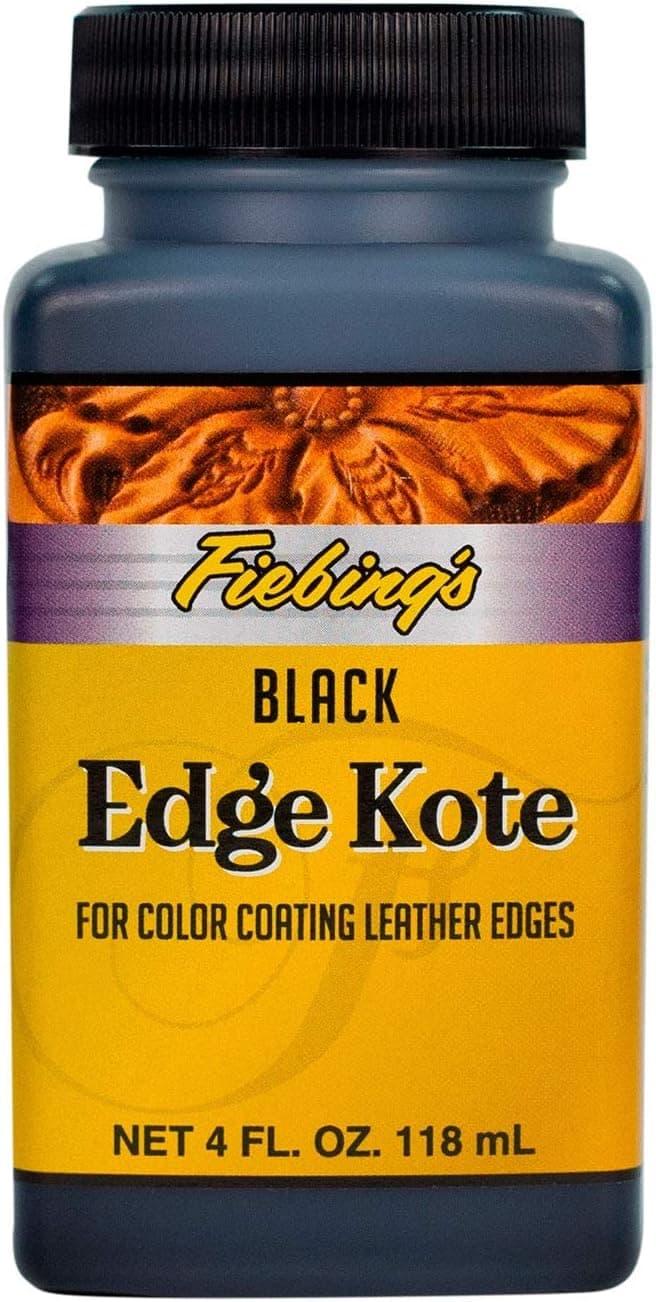
Fiebing's Edge Kote in black, 4oz, a flexible, water resistant medium gloss coating for leather edges.
Price range: See on Amazon
What we liked
- + Flexible coating bends with belts and straps
- + Water resistant finish protects raw edges
- + Medium gloss black gives a clean, polished edge
Trade-offs
- - Multiple thin coats are needed for a smooth edge
- - Can crack if applied too thick on flexible items
What Edge Kote is built to do
Fiebing's Edge Kote sits between a dye and a paint, designed specifically to color and finish the cut edges of leather goods like belts, wallets, straps and saddlery rather than the flat surface of a hide. The maker describes it as drying to a flexible, water resistant finish with a medium to semi-gloss sheen, and unlike a stiff lacquer it both soaks slightly into the edge fibers and sits on the surface, which is what allows it to bend along with the leather instead of flaking off at a fold or crease. It is recommended for use on natural, unfinished edges rather than rough-out or suede surfaces, since it is built to color and seal a cut edge rather than a textured nap.
Why flexibility matters on an edge coating
A leather edge on a belt, strap or wallet flexes every time the item is worn or handled, and a rigid coating applied to that edge will eventually crack or chip away at the flex points, leaving a rough, uneven line. Edge Kote's flexible finish is built to move with the leather instead of resisting it, which is the main reason it has remained a standard choice for edge finishing over the decades rather than a generic paint. The water resistant quality adds a second layer of protection, helping the colored edge shed light moisture instead of soaking it in and darkening or staining, which matters for belts and bags that see regular outdoor or everyday handling.
How it is applied for a clean result
The typical process starts with slicking and burnishing the edge, often with a product like Fiebing's Gum Tragacanth, before Edge Kote is applied thinly with a dauber, small brush or a roller pen made for edge work, avoiding excess product that pools rather than absorbs. Multiple thin coats, each allowed to dry before the next, generally give a smoother, more even black edge than one heavy application, which is prone to looking uneven or taking longer to dry through. It typically dries to the touch within a few minutes, though full cure depends on temperature and humidity, and the finish can be buffed lightly with a clean cloth afterward for extra shine if a glossier look is wanted over the medium gloss default.
Trade-offs and how it compares
Compared with a roller-applied product like Tandy Leather's Craftool Pro Edge Dye Roller, Edge Kote is a dauber or brush applied liquid rather than a dedicated roller system, which can mean more control on curved or narrow edges but a slower process on long, straight runs. Against Tandy's Eco-Flo Edgeflex Edge Paint, both aim for a flexible, cracking-resistant edge finish, and the choice often comes down to personal preference in application tools and slight differences in gloss level rather than a major performance gap. Applied too thickly in a single heavy coat, Edge Kote can crack on a piece that flexes a lot, such as a belt, which is why the thin multi-coat approach matters more here than with a flat surface finish.
Who should buy this edge coating
Edge Kote in black suits anyone finishing natural, cut edges on belts, wallets, straps, sheaths or saddlery who wants a flexible, water resistant black line that will not flake off at flex points. It is a good match for projects with a lot of edge length to finish, since the 4 oz. bottle covers plenty of edge for the amount of product actually used per coat. Buyers working on rough-out or suede-edged pieces should look elsewhere, since this product is meant for natural, unfinished edges rather than a nap surface. Anyone new to edge finishing should expect to practice the thin-coat technique on scrap first, since a heavy first coat is the most common way to end up with an uneven or cracking result.
Frequently asked questions
How many coats of Edge Kote does a leather edge need?
Most edges need a few thin coats, each allowed to dry before the next, rather than one heavy application, which tends to look uneven and dries less evenly.
Will Edge Kote crack on a belt that flexes a lot?
It dries to a flexible finish meant to bend with the leather, but applying it too thickly in a single coat can still cause cracking, so thin, even coats hold up better on items that flex constantly.
Can Edge Kote be used on suede or rough-out leather edges?
No, Fiebing's recommends it for natural, unfinished edges rather than suede or rough-out surfaces, which it is not built to coat evenly.
How long does Edge Kote take to dry?
It typically dries to the touch within a few minutes, though full cure time depends on temperature and humidity in the workspace.
Prices change often, so check the current price and availability on Amazon.
Check price on AmazonLeatherwork Nest may earn a commission from the link above.