Fiebing's Acrylic Resolene (4 oz) - Protective Acrylic Leather Finisher - Glossy Finish Top Coat for Dyed & Polished Leathercraft (Neutral) Review (2026)
Updated September 14, 2026 · Research-based review
Our verdict
Fiebing's Acrylic Resolene in the 4 oz Neutral bottle is a water based acrylic top coat for tooled and dyed leather that adds a clear, medium to high gloss layer without changing the underlying color. It suits small to medium projects best, since a gallon jug is the better buy once you finish more than a handful of pieces a month.
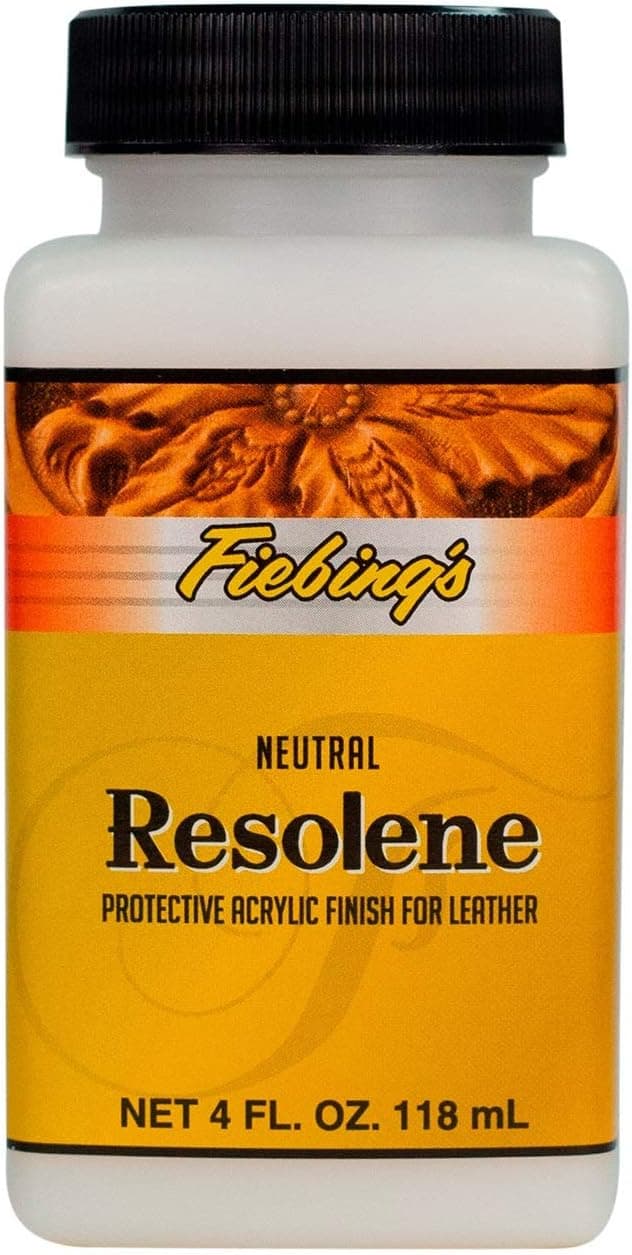
A neutral 4 oz bottle of Fiebing's Acrylic Resolene, a clear gloss finisher that locks in dye on tooled leathercraft.
Price range: See on Amazon
What we liked
- + Clear neutral coat keeps tooled details visible
- + Acrylic resin layer helps shield dyed leather from moisture
- + Resolene can be diluted for a softer sheen
Trade-offs
- - Seals the surface, so later conditioning absorbs less
- - Uneven dauber strokes can leave visible streaks
What this bottle actually is
Resolene is a water based acrylic finish that Fiebing's sells in Neutral, Black and Brown, and in 4 oz, 32 oz and gallon sizes. The Neutral 4 oz bottle reviewed here goes on clear, so it will not tint or darken dyed or antiqued leather the way a Black or Brown version would. It is meant as a final step after dyeing, antiquing, polishing, painting or oiling, once the leather surface is ready for a protective top coat. For tooled belts, wallets and holsters, the neutral formula is the safer starting point because it leaves carved and stamped detail fully visible instead of pooling color into the grooves.
Finish, coverage and what the bottle gives you
Fiebing's describes Resolene as flexible, durable and water resistant, producing a medium to high gloss on the leather surface once cured. The acrylic film is designed to move with the leather rather than crack, which matters on items that flex daily, like wallets, belts and bag straps. A 4 oz bottle is a trial or small shop size. It covers a modest run of wallets, key fobs or small tooled pieces, but production shops that finish dozens of items a month will burn through it fast and should look at the 32 oz or gallon jugs of the same neutral formula instead.
Applying it without streaks
Resolene is typically applied thin with a wool dauber, sponge or airbrush, and most leatherworkers dilute it with water for a softer, more even sheen rather than applying it straight from the bottle. Thin, even strokes in one direction, followed by a light second coat once the first is dry, give the most consistent gloss. Because the finish is an acrylic film, uneven or overloaded dauber strokes tend to show as visible streaks or lap marks once cured, so working in good light and keeping the leather flat while it dries both help. Multiple thin coats beat one heavy coat almost every time with this product.
The trade-off: a sealed surface
Once Resolene cures, it lays an acrylic film over the leather that is meant to resist water and light handling wear. The flip side is that this same film limits how much oil or conditioner the leather can absorb afterward, so conditioning is best done before the top coat goes on rather than after. Compared with Fiebing's own Black Acrylic Resolene, which tints as it seals, the Neutral version is the pick for projects where you want the gloss without any color shift. Against Angelus Matte and Satin acrylic finishers, Resolene tends to sit toward the glossier end unless it is diluted down for a softer sheen.
Who should buy the 4 oz bottle
This size fits hobbyists and small-batch makers who tool or dye leather occasionally and want a reliable, well documented top coat without committing to a large jug. If your projects lean toward matte or satin looks rather than gloss, an Angelus Matte or Satin acrylic finisher will get you closer without needing to dilute Resolene down. If you finish leather in volume, the 32 oz or gallon Resolene works out to a lower cost per project and avoids running out mid batch. For a clear, flexible, water resistant top coat on tooled work, though, the 4 oz Neutral Resolene remains a dependable starting point, matching our score of 8.4 out of 10 for fit and value at this size.
Frequently asked questions
Will Neutral Resolene change the color of my dyed leather?
No, the Neutral formula dries clear, unlike the Black or Brown versions, so it protects the surface without shifting the dye color underneath.
Can Resolene be diluted before applying?
Yes, many leatherworkers cut it with water to get a thinner, more even coat and a softer sheen than it has straight from the bottle.
How many coats should I apply?
Two thin coats applied in one direction, with drying time between them, typically give a more even finish than one heavy coat.
Does Resolene stop leather from absorbing conditioner later?
Yes, once cured it forms a sealed acrylic film, so it is best to condition the leather before applying the top coat rather than after.
Prices change often, so check the current price and availability on Amazon.
Check price on AmazonLeatherwork Nest may earn a commission from the link above.