Fiebing's Pro Dye Saddle Tan, 4 oz. Professional Oil Dye for Leather Review (2026)
Updated September 14, 2026 · Research-based review
Our verdict
A classic warm brown oil dye from Fiebing's Pro Dye line, built to penetrate vegetable tanned leather for an even, lasting Western-style tan. It layers well for deeper shading in multiple coats, but light or uneven leather can dye blotchy without careful application, and a top coat is needed to cut down on color transfer.
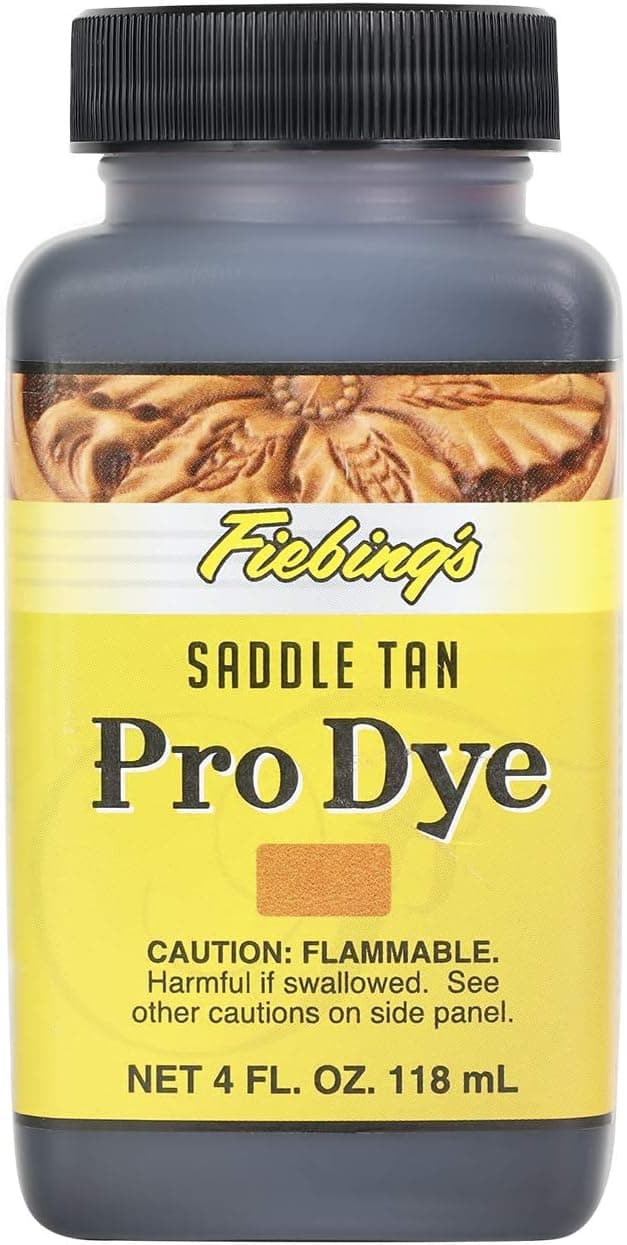
Fiebing's Pro Dye in saddle tan, 4 oz., a classic warm brown oil dye for traditional leather goods.
Price range: See on Amazon
What we liked
- + Saddle tan is a classic Western and belt color
- + Oil dye soaks in for an even, lasting tone
- + Layers well in several coats for darker shading effects
Trade-offs
- - Can look blotchy on uneven leather without careful application
- - Needs a top coat to reduce color transfer
What saddle tan is and where it fits
Saddle tan is one of roughly twenty colors in Fiebing's Pro Dye line, a premium penetrating, alcohol based dye the maker builds specifically for natural strap leather, vegetable tanned leather and bag and case leather. The shade itself is a warm, medium brown associated with traditional Western leatherwork, saddlery and classic belts, sitting between the lighter tans and the darker chocolate and dark brown shades in the same range. Because it penetrates into the leather fibers rather than coating the surface, saddle tan Pro Dye gives an even color through the material rather than a thin painted layer, which is part of why it has remained a standard choice for traditional tack and belt work over the newer surface paints on the market.
How the color behaves on veg tan leather
Vegetable tanned leather varies naturally in density and tightness of grain from piece to piece, and because Pro Dye is a penetrating dye, it will absorb somewhat unevenly on leather with inconsistent tanning or surface texture, which can show up as light blotching if the dye is applied carelessly or in an uneven amount across a single piece. A light, even first coat followed by a second pass in areas that need more depth tends to give the most consistent saddle tan result, rather than trying to reach full color in a single heavy application. This layering approach is also how many crafters achieve subtle depth or shading effects, building the tan up gradually rather than flooding the leather all at once.
Applying it and finishing the piece
Like the rest of the Pro Dye line, saddle tan is generally applied with a wool dauber, sponge or soft cloth, working in thin coats and letting each one absorb before deciding whether another pass is needed. Once dry, the dye itself is flexible and will not crack with normal bending, but it does not include a sealed topcoat, so saddle tan leather left undyed can transfer some color onto light-colored clothing or upholstery with repeated contact. A finish like Resolene or a similar leather sealer is the usual follow-up step to lock the color in and cut down on that transfer, which matters most for belts, wallets and other pieces that see regular skin or fabric contact.
Trade-offs and how it compares
Against a lighter shade like Fiebing's own Pro Dye Dark Brown 32oz, saddle tan sits at a different point on the color spectrum entirely, so the choice between them comes down to the traditional Western tan look versus a deeper brown rather than any difference in how the dye performs. Compared with Angelus Permanent Leather Dye in a similar tan tone, Fiebing's Pro Dye is generally the deeper-penetrating option built specifically around vegetable tanned leather, while Angelus covers a broader range of leather types. As with the rest of the line, this 4 oz. bottle suits smaller individual projects better than production dyeing, where the 32 oz. size becomes more economical per ounce.
Who should buy this dye
Saddle tan Pro Dye suits anyone working on belts, tack, wallets, holsters or other traditional leather goods where a classic Western brown is the goal, especially projects built on vegetable tanned leather that will take the dye's penetration well. New leatherworkers should expect to practice the layering technique on scrap leather first, since uneven application shows more readily in a mid-tone brown than it would in black. Buyers wanting a darker, richer brown should look at Fiebing's own dark brown or chocolate Pro Dye shades instead, and anyone dyeing large volumes of leather regularly will get better value from the 32 oz. bottle than repeatedly buying the 4 oz. size.
Frequently asked questions
Why does saddle tan dye sometimes look blotchy?
Because Pro Dye penetrates the leather rather than sitting on the surface, uneven application or leather with inconsistent tanning can absorb the color unevenly, which shows up more visibly in a mid-tone shade like saddle tan than in black.
Can I layer saddle tan dye for a darker look?
Yes, applying additional thin coats after the first has absorbed is a common way to build deeper color and shading rather than trying to reach full depth in one heavy application.
Does saddle tan Pro Dye need a topcoat?
It is not a sealed finish on its own, so a topcoat like Resolene is generally applied afterward to reduce color transfer onto clothing or upholstery from regular contact.
Is saddle tan Pro Dye the same formula as the other Pro Dye colors?
Yes, it uses the same penetrating, alcohol based formula as the rest of the Pro Dye line, just in a different shade suited to traditional Western leatherwork.
Prices change often, so check the current price and availability on Amazon.
Check price on AmazonLeatherwork Nest may earn a commission from the link above.