7 in 1 Adjustable Pro Stitching Groover and Creasing Edge Beveler Leathercraft Set Review (2026)
Updated September 14, 2026 · Research-based review
Our verdict
This 7 in 1 set combines an adjustable stitching groover, creaser, and edge beveler in one wood handled tool, letting leatherworkers cut a recessed stitch channel and round edges without buying three separate tools. It is versatile and good value, but the swappable tips are easy to lose without a dedicated box.
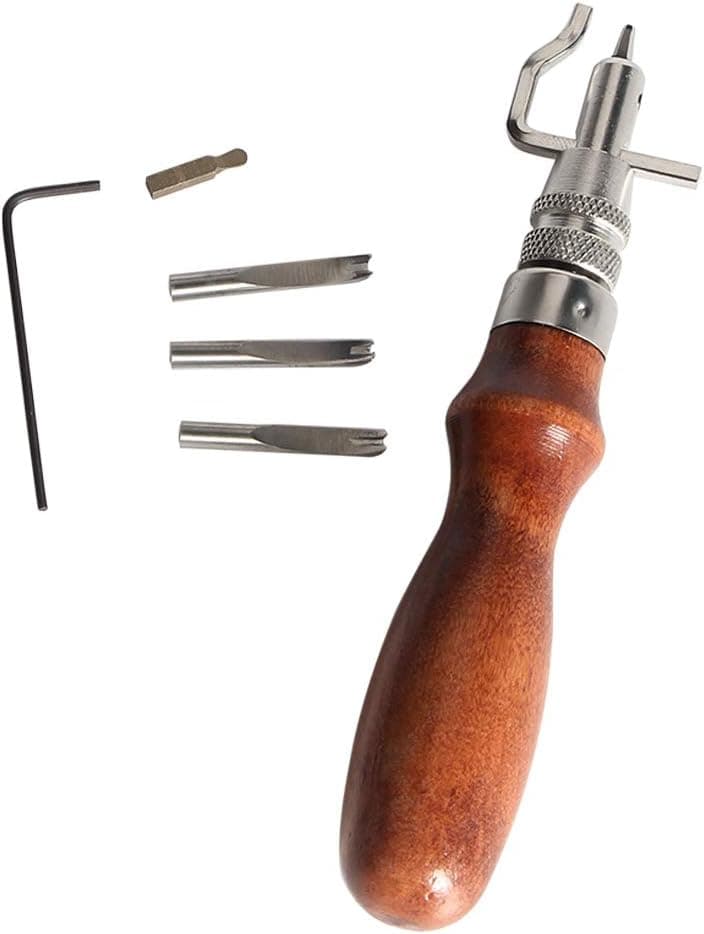
A 7 in 1 adjustable pro stitching groover and edge beveler set, cutting stitch channels and beveling edges.
Price range: See on Amazon
What we liked
- + 7 in 1 set covers grooving, creasing and edge beveling
- + Adjustable guide keeps stitch channels parallel to the edge
- + Groove protects stitches from wear on belts and straps
Trade-offs
- - Many interchangeable tips can get lost without a case
- - Groover blades need occasional sharpening for clean channels
Who this multi-tool set fits
This set is built for leatherworkers making belts, wallets, straps, and bags who want a stitch groove, a decorative crease line, and a rounded edge bevel from one handle instead of three separate tools. Grooving cuts a shallow channel just inside the edge so the thread sits below the surface, protected from abrasion on belts and straps that see daily friction. A stitch groover pairs naturally with an edge beveler, since both work along the same edge in sequence, first bevel the corner round, then groove the stitch line, then crease a decorative border if wanted. Hobbyists building out a first leathercraft kit get the most value here, since one adjustable handle with swappable tips covers jobs that would otherwise need a groover, a creaser, and a beveler bought separately.
How the adjustable design works
The set uses a wood handle with a steel blade holder that loosens and retightens with a small screw, letting you swap between grooving, creasing, and edge beveling tips and adjust how far the blade sits from the edge guide. That edge guide is what keeps the stitch line running parallel to the leather's edge instead of wandering, which matters most on long straps like belts and bag handles. Because the blade depth and the guide distance are both adjustable, the same tool can groove close to a thin edge on a wallet or run a wider channel on a heavier belt blank, rather than being locked to one fixed width like a basic fixed groover.
Using it day to day and keeping it working well
In use, you draw the tool along the leather edge in one smooth pass, letting the guide ride against the edge while the blade cuts the groove, crease, or bevel. Getting a clean cut takes a sharp blade and firm, even leather, so veg tan that has been properly cased or oiled cuts more cleanly than dry, stiff scrap. The interchangeable tips are the part to watch: with several small pieces in the set, it is easy to lose one in a workbench drawer, so owners of similar multi-tip groover sets generally recommend keeping the pieces in a small labeled box or tin rather than loose in a tool tray. Occasional light sharpening or a fresh blade keeps the groove and bevel cuts crisp instead of tearing the leather fiber.
Trade-offs against dedicated single-purpose tools
A dedicated adjustable groover like the Tandy Leather Craftool Pro Stitching Groover Set or a simpler fixed edge beveler will usually feel more solid in the hand and have fewer small parts to lose, since they are built around one job instead of seven. What this set trades away in single-purpose polish, it gains back in shelf space and starting cost, since one handle and a set of tips covers grooving, creasing, and beveling instead of buying each tool on its own. For occasional or hobby use across a few projects a year, the multi-tip approach is a reasonable compromise. For a working shop doing edge work daily, a dedicated groover or beveler tends to hold up better to constant use.
Verdict
Choose this set if you are assembling a first leathercraft toolkit and want grooving, creasing, and edge beveling covered by one adjustable handle without buying three separate tools. It is a sensible way to try all three edge-finishing techniques before deciding which one you use most, and the adjustable guide means it can grow with you from small wallet projects into wider belt work. Choose a dedicated single-purpose groover or beveler instead if you already know you will use one function constantly, since a purpose-built tool tends to feel more solid in hand and has fewer small interchangeable parts that can go missing over a busy workbench season. Either way, keep spare blades on hand since edge tools dull with regular use on veg tan leather.
Frequently asked questions
What is the difference between grooving and edge beveling on this tool?
Grooving cuts a shallow recessed channel for the stitch line to sit in, while edge beveling shaves the sharp outer corner of the leather into a rounded profile. This set includes tips for both.
Does the groover width adjust for different projects?
Yes, the blade holder loosens and retightens so you can change the distance between the blade and the edge guide, letting you cut narrower or wider channels depending on the project.
Can beginners use a 7 in 1 groover and beveler set?
Yes, though it helps to practice on scrap leather first, since blade depth and guide pressure both affect how clean the cut looks.
How do I keep from losing the interchangeable tips?
Store the tips in a small labeled box or tin rather than loose in a drawer, since the parts are small enough to misplace easily during a project.
Prices change often, so check the current price and availability on Amazon.
Check price on AmazonLeatherwork Nest may earn a commission from the link above.