Seiwa Leathercraft Sewing Roulette Leather Stitching Wheel + 4 Overstitch Spacer Review (2026)
Updated September 14, 2026 · Research-based review
Our verdict
Seiwa's sewing roulette pairs a steel, Japanese made stitching wheel with four interchangeable spacers, letting leatherworkers mark 3mm to 6mm stitch spacing on one handle. The strength is precision from a respected tool brand, and the trade-off is it only marks holes, so a separate awl or chisel is still needed.
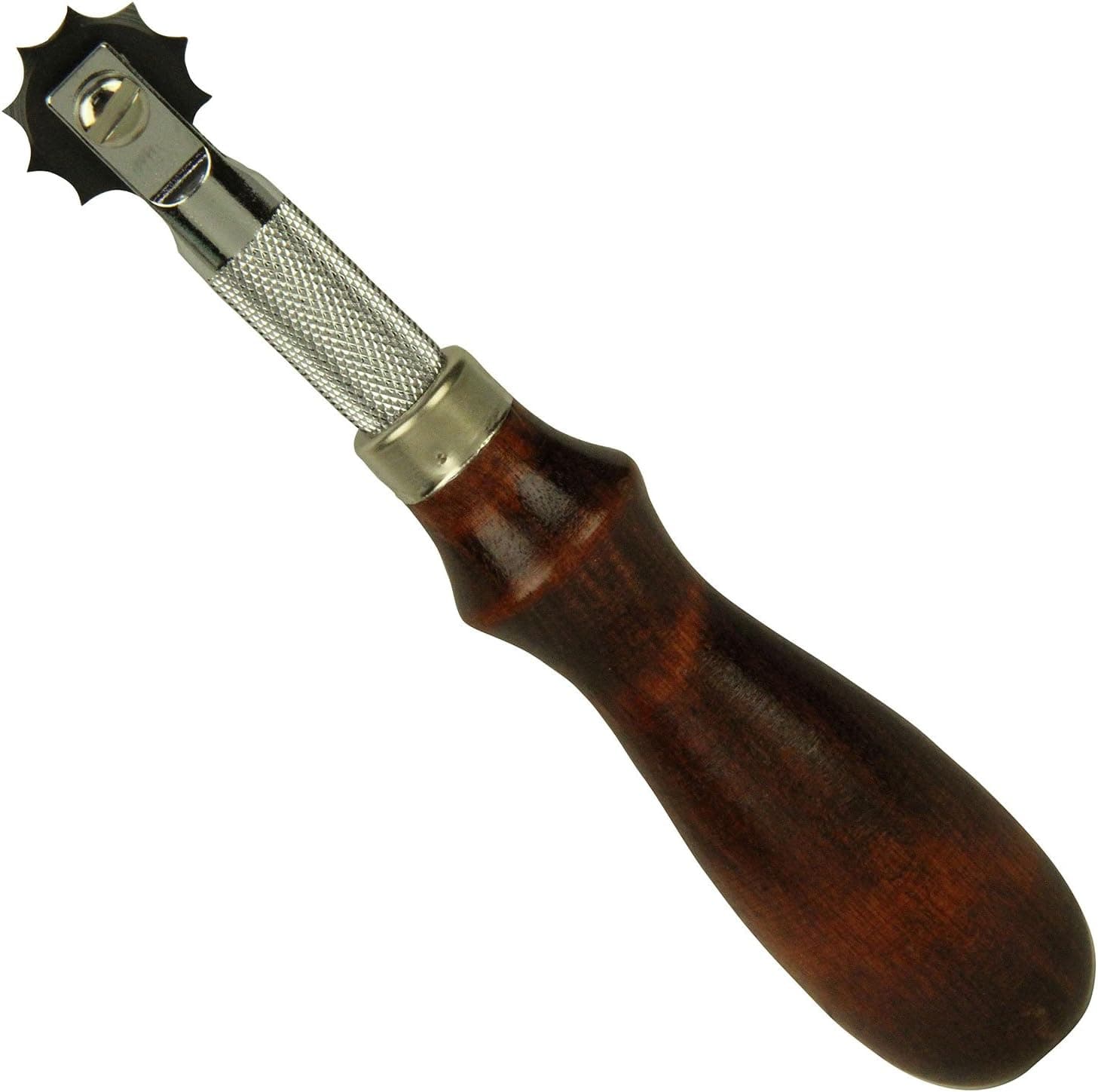
Seiwa's sewing roulette stitching wheel with 4 overstitch spacers, a Japanese tool for marking stitch spacing.
Price range: See on Amazon
What we liked
- + 4 overstitch spacers let you change stitch density
- + Seiwa tools are well regarded for precision
- + Rolling wheel marks long straight lines quickly
Trade-offs
- - Marks can be faint on firm leather without casing
- - Needs a matching awl or punch to finish holes
Who This Stitching Wheel Fits
This is Seiwa's sewing roulette, a straight type stitching wheel used to mark evenly spaced points along a stitch line before punching holes with a pricking iron or awl. The set includes four interchangeable spacer wheels, letting one handle cover several stitch densities rather than buying a separate tool for each spacing. Leatherworkers who make a range of goods, from fine wallets that want tight, close stitching to heavier bags and belts that look better with wider spacing, benefit most from having several wheels on hand. Buyers who already own a single fixed spacing wheel and want more flexibility, or who are assembling a first stitching kit and want several spacings in one purchase, are the clearest fit for this set.
Wheel Spacing and Build Quality
The four included wheels space points at 3mm, 4mm, 5mm and 6mm, which work out to roughly 8, 6, 5 and 4 holes per inch respectively, covering the range most hand stitched leather goods use. The tool is made in Japan from steel rather than a cast metal, a detail that affects how well the wheel points hold up to repeated rolling over firm veg tan leather without dulling or bending. The handle has a curved, ergonomic shape with a checkered grip section and a finger rest partway down the neck, aimed at reducing hand fatigue during long marking sessions and at keeping the wheel from twisting off a straight line. At roughly 40 grams net weight, it is light enough for extended use without adding noticeable wrist strain.
Marking Stitch Lines in Practice
Using the wheel means rolling it firmly along a straight edge or stitching groove, letting the points bite lightly into the leather surface to leave an evenly spaced dotted guideline. On firm, uncased leather the marks can come out faint, so many leathercrafters case the leather first, dampening it slightly so the points leave a clearer, more visible impression. The wheel only marks the spacing; it does not punch through the leather, so a diamond awl, pricking iron or hand stitching chisel is still needed afterward to actually create the holes for thread. Swapping between the four included wheels is meant to be tool free, letting a maker switch spacing mid project, for example marking a finer line on a card slot and a wider one on a main body seam without buying additional tools.
Comparing Spacer Sets
Several competing stitching spacer sets, including offerings from other leathercraft brands, ship with three wheels rather than four, so this Seiwa set stands out by including the 6mm option alongside the more common 3mm, 4mm and 5mm spacings, giving one extra option for wider, more visible stitching on larger bags and belts. A basic set from Tandy's own Craftool line covers four interchangeable spacing wheels as well, at a similar price point, so the choice between the two often comes down to handle comfort and whether a buyer prefers a Japanese made tool over an American brand. None of these spacer wheels replace a pricking iron for actually forming the holes; they only lay out where those holes should go.
Bottom Line
Leatherworkers who stitch a range of project sizes and want one tool that covers four common spacings, from tight wallet stitching to wider belt work, get solid value from this set, especially if consistent hole spacing across a production run matters. Buyers who only ever stitch one spacing, say a single 4mm line on every project, may not need the flexibility of four wheels and could save money with a single fixed spacing tool instead. Anyone without a pricking iron, awl or diamond chisel already on hand should budget for one of those separately, since this wheel only marks the stitch line rather than punching the actual holes.
Frequently asked questions
Does this tool punch holes or just mark them?
It only marks evenly spaced points along the leather. You still need a pricking iron, diamond awl or stitching chisel to actually punch through for the thread.
Which stitch spacing should I use for a wallet versus a belt?
Finer spacing like 3mm or 4mm suits small, detailed work like wallets and card holders, while wider 5mm or 6mm spacing is common on belts and larger bags where the stitching is meant to be more visible.
Why are my marks coming out faint?
Firm, dry leather can resist the wheel points. Casing the leather first, dampening it lightly, usually produces a clearer, more visible impression before punching.
Can I switch between the four wheels easily?
Yes, the wheels are designed to be interchangeable on the same handle so you can swap spacing between sections of a project without needing a separate tool for each.
Prices change often, so check the current price and availability on Amazon.
Check price on AmazonLeatherwork Nest may earn a commission from the link above.