TOFL Leather Craft Scissors - Heavy Duty Shears for Cutting Thick Hide, Magnesium Steel, 7.3 Inches Review (2026)
Updated September 21, 2026 · Research-based review
Our verdict
TOFL's magnesium steel shears suit crafters cutting thick hide who want dedicated leather scissors rather than repurposed fabric shears. The 7.3 inch blade and large finger opening give good reach and comfort, though very firm tooling leather still cuts cleaner with a knife, and sharpening scissors takes more care than a straight blade.
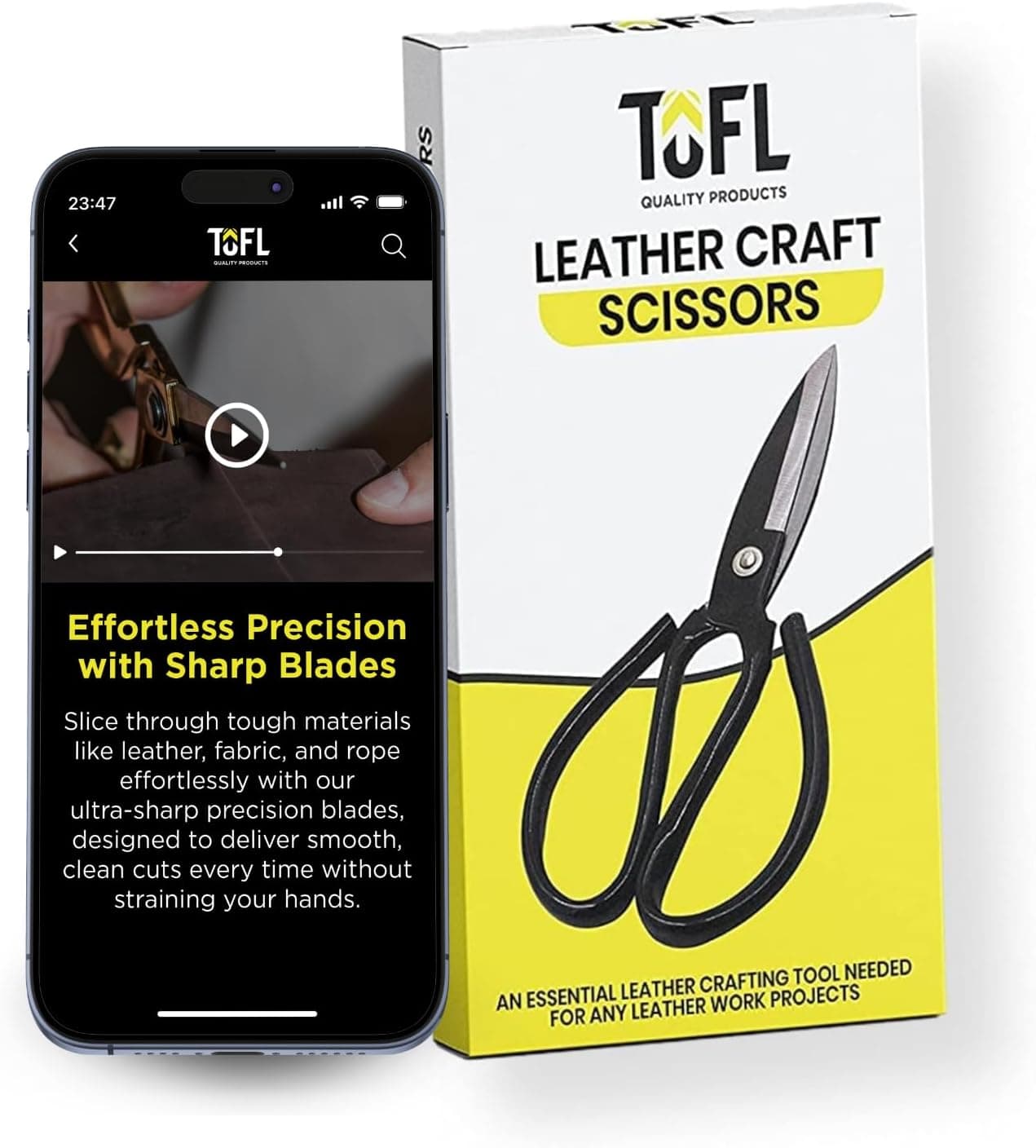
TOFL's 7.3 Inches heavy duty leather craft scissors in magnesium steel, built for cutting thick hide and tough materials.
Price range: See on Amazon
What we liked
- + Heavy duty shears are designed specifically for thick hide
- + Magnesium steel blades aim to stay sharp through tough cuts
- + 7.3 Inches length balances control with cutting reach
Trade-offs
- - Very firm tooling leather is still cleaner with a knife
- - Blade sharpening is harder on scissors than on straight knives
Built for thick hide
These shears are marketed specifically as heavy duty scissors for cutting thick hide material, made with magnesium steel blades rather than the lighter stainless steel used in general purpose fabric scissors. The blades measure 7.3 inches, which is a mid-to-large size for craft scissors, giving enough length to make longer cuts without repositioning constantly, and the design includes a large finger opening meant to let the tool be used comfortably over longer cutting sessions rather than straining the hand quickly the way smaller, tighter-handled scissors can. That combination of blade length and opening size is aimed squarely at leathercraft rather than at light paper or thread trimming, where a smaller pair of scissors would be a better fit.
Handle and grip
The handle is made from TPU, a flexible plastic chosen for a comfortable, non-slip grip rather than the bare metal loops found on some traditional shears. Combined with the compact overall design and large opening, this is meant to reduce hand fatigue during longer cutting sessions, which matters more for scissors than for a knife since a scissor cut relies on repeated squeezing motion rather than a single controlled slice. TOFL positions these as a multipurpose crafting tool as well, usable beyond leather for general sewing, garment work, and rope or webbing cutting, so the same pair can move between a leather bench and general craft or sewing tasks without needing a second dedicated tool.
Magnesium steel blades
Magnesium steel is used here for its combination of strength and relatively light weight compared to some other tool steels, which is meant to help the blades stay sharp through repeated tough cuts on thick material without adding excessive weight to the tool. For leathercraft specifically, that durability matters because cutting thick hide dulls a blade faster than cutting paper or thin fabric, so a steel chosen to hold an edge under that kind of use is a meaningful design choice over generic craft scissors not built with leather in mind. A lighter blade also means less wrist strain across a long cutting session compared to an all-steel pair of similar size.
Where scissors beat a knife, and where they do not
Scissors like these are genuinely useful for certain leatherworking tasks: trimming curves, cutting thinner or medium leather quickly, and cutting non-leather materials like webbing, elastic, or fabric linings that often accompany a leather project. On very firm, thick tooling leather, though, a sharp straight or round knife used with a straightedge generally gives a cleaner, more controlled cut than scissors can, since squeezing a blade through very stiff material can crush or distort the edge rather than slicing it cleanly, which is the trade-off the site's own cons point to.
Sharpening and upkeep
Keeping any leather shears sharp matters for clean cuts, and scissors are inherently more involved to sharpen well than a straight or round knife, since both blade edges need to be maintained at matching angles and the pivot has to stay properly tensioned for the blades to meet correctly. A dull pair of shears will crush or drag through leather rather than cutting cleanly, so periodic sharpening, either with a proper scissor sharpening tool or through a professional service, is part of realistic upkeep for a pair of scissors used regularly on thick hide rather than light fabric.
Frequently asked questions
Can these cut very thick tooling leather cleanly?
They are built for thick hide, but very firm tooling leather generally cuts more cleanly with a straight or round knife than with any scissors.
What is the blade length?
The shears are 7.3 inches long, a mid-to-large size that gives good reach for longer cuts.
Can I use these for materials other than leather?
Yes, they are described as a multipurpose crafting tool suitable for sewing, garment work, and cutting rope or webbing as well as leather.
How do I keep them cutting cleanly over time?
Periodic sharpening is needed since scissors dull with use on thick hide, and both blades need to be kept at matching angles for a clean cut.
Prices change often, so check the current price and availability on Amazon.
Check price on AmazonLeatherwork Nest may earn a commission from the link above.