WUTA Ebony Wood Leather Burnisher, 2Pcs Professional Leather Edge Burnisher High Density Black Wood Edge Slicker (Round Head + Slim Stick) Review (2026)
Updated September 14, 2026 · Research-based review
Our verdict
WUTA's two piece ebony burnisher set pairs a round head for wider edges with a slim stick for tight spots like card slots and belt loops. The dense wood polishes edges quickly once burnishing gum and moisture are added, but there are no wide grooves for very thick, stacked leather and the hardwood costs more than a plain wood slicker.
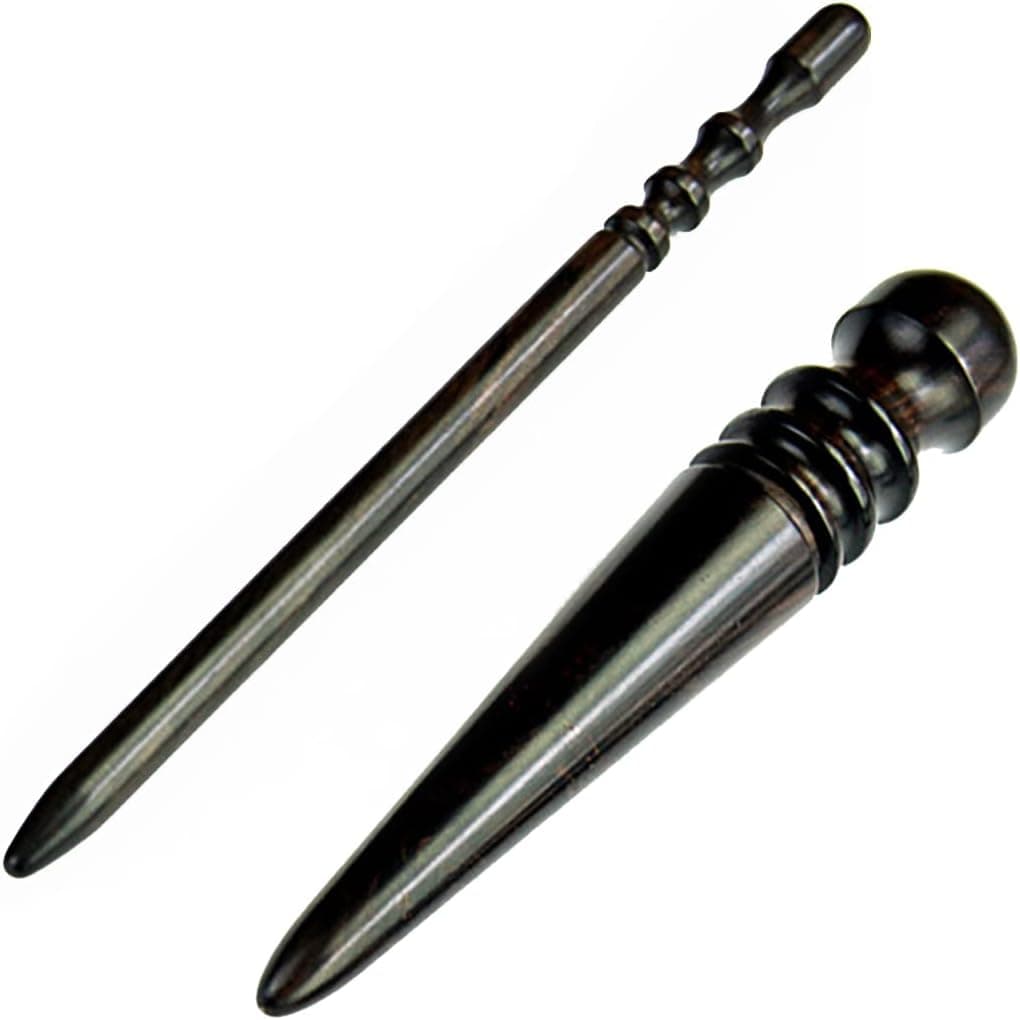
WUTA's 2Pcs ebony wood burnishers, a round head and slim stick, high density black wood edge slickers.
Price range: See on Amazon
What we liked
- + High density ebony polishes edges quickly
- + Slim stick reaches tight spots like card slot edges
- + Round head handles thicker belt and strap edges
Trade-offs
- - No wide grooves for very thick straps or stacked layers
- - Premium hardwood costs more than plain wood slickers
Who this two piece set fits
This set is built for makers doing small leather goods work, cardholders, wallets and bags, where a round handled burnisher handles the outer strap and panel edges while the slim stick reaches narrow gaps a bulkier tool cannot. The slim stick measures about 5.9 inches and the round head about 5.5 inches, both sized to be held comfortably by hand rather than chucked into a rotary tool. Anyone finishing very thick belts, multiple stacked layers, or saddle grade leather will find the profiles here better suited to thinner goods, and should look at a burnisher with wider grooves instead.
What high density ebony brings to burnishing
Both pieces are made from high density ebony wood, chosen because its tight grain and smooth surface let it polish leather fibers without the tool itself picking up grooves or roughness over time the way a softer wood can. The round head is suited to thicker belt and strap edges, while the slim stick is shaped to work tight spots such as card slot edges, buckle loops and small curved cutouts that a wider tool cannot reach cleanly. Neither piece includes built in grooves of different widths the way some tapered slickers do, so technique and hand pressure do more of the work here.
Using the burnishers on an edge
The edge is moistened first, then a burnishing aid such as saddle soap, glycerin or a gum like Tokonole is worked in before rubbing the wood back and forth under pressure until friction heats the leather and brings up a shine. Working in short, repeated passes rather than one long rub tends to build a more even polish across the whole edge. Because these are unpowered hand tools, results depend on consistent pressure and enough passes, and they will not match the speed of a powered rotary burnisher, though they give more control on delicate or oddly shaped edges.
Round and slim versus a single tapered slicker
Compared with a single tapered burnisher like the Break Leather Art or OWDEN ebony tools that build several groove widths into one tapered body, this WUTA set trades built in grooves for two separate shapes purpose built for wide and narrow areas. That makes it a good complement to a tapered slicker rather than a full replacement, since the slim stick in particular excels at slots and loops a tapered tool struggles to reach cleanly and quickly. Buyers who want one tool that handles a range of edge thicknesses in a single grip may prefer a grooved tapered slicker instead of this two piece set.
Verdict and who should look at other tools
For small leather goods work where card slots, loops and tight corners come up often, this round head and slim stick pairing covers ground a single burnisher cannot, and the dense ebony holds up well to repeated use across many projects without picking up rough spots. It is not the right choice for thick belts, saddle leather or stacked layers, since there are no wide grooves to match those edges, and it costs more than a basic single wood slicker sold on its own. Crafters working mostly on wide, uniform edges would get more direct value from a wider grooved slicker or a tapered burnisher instead of this narrower focused pairing.
Frequently asked questions
What wood are these burnishers made from?
Both the round head and the slim stick are made from high density ebony wood, chosen for its tight grain and smooth polishing surface.
Do I need anything else besides the wood tool to burnish an edge?
Yes, the leather edge should be moistened and a burnishing aid such as saddle soap, glycerin or a gum applied before rubbing the wood tool over it.
What is the slim stick best used for?
It is shaped to reach tight spots like card slot edges, belt loops and small curved cutouts that the round head or a wider tool cannot easily reach.
Will this set work on thick belts or saddle leather?
It is better suited to thinner small leather goods. There are no wide grooves for very thick, stacked or saddle grade edges.
Prices change often, so check the current price and availability on Amazon.
Check price on AmazonLeatherwork Nest may earn a commission from the link above.