Rivet Tool - 240 Sets Leather Rivets Kit with Rivet Press Plier, 10mm Double Cap Rivets in 4 Colors & 2 Heights Review (2026)
Updated September 21, 2026 · Research-based review
Our verdict
This kit suits leathercrafters and bag makers who want a quiet, hammer-free way to set rivets across a range of thicknesses. The plier press and 240 assorted 10mm rivets in two heights cover most everyday projects, though the pliers' throat depth limits how far from an edge a rivet can sit.
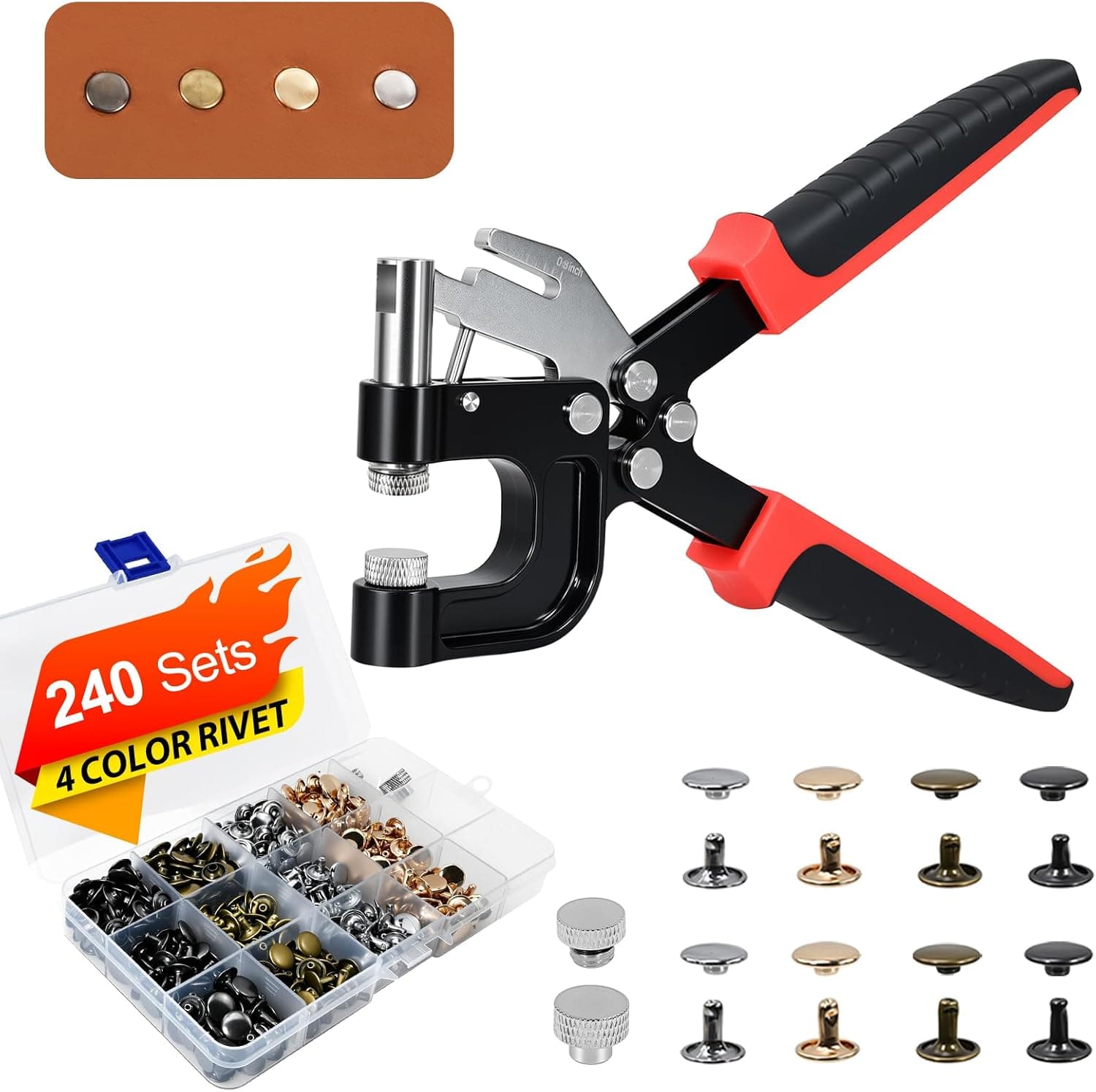
A rivet press plier kit with 240 sets of 10mm double cap rivets in 4 colors and 2 heights, setting rivets by hand.
Price range: See on Amazon
What we liked
- + Press plier sets rivets without hammer noise
- + 240 sets of 10mm rivets come in 4 colors
- + 2 heights handle thin and thicker leather stacks
Trade-offs
- - Plier reach limits rivets far from the edge
- - Pressing can leave slightly flatter caps than a setter
What's in the kit
This kit pairs a rivet press plier with 240 complete sets of 10mm double cap rivets, split across four finishes, gold, silver, copper, and black, and two heights, 6mm and 8mm, with 30 sets in each color and height combination. The plier itself works as a combined punch and rivet setter, with a built-in alignment guide and an integrated punch that is meant to pierce leather, denim, or canvas cleanly before the rivet is pressed into place. Rather than needing a separate hole punch, hammer, and anvil, the tool folds punching and setting into one handheld device, which suits makers who want a compact kit for belt making, bag repair, or general leathercraft rather than a full workshop setup.
How the press plier works
Because the rivets are set by squeezing plier handles rather than striking a setter with a mallet, this tool avoids the repeated hammer noise that comes with traditional rivet setting, which matters for anyone working in an apartment, shared space, or evening hours. The mechanism applies steady, even pressure as the handles close, pressing the cap and post together in one motion instead of several taps that can leave a rivet looking uneven if the blows land off center. This also reduces the risk of denting the surrounding leather or fabric from a stray hammer strike, an advantage for beginners still learning to gauge rivet setting force. The trade-off is that the press relies on hand strength rather than the mechanical advantage of a full-size press machine, so the thickest stacks may take more effort to close fully.
Choosing between the two heights
The kit's two rivet heights are meant to match different material thicknesses, the 6mm rivets suit roughly 3 to 4mm stacks, such as shirt collars or lightweight canvas, while the 8mm rivets are sized for about 5 to 6mm stacks, which covers belt leather or heavier canvas bags. Having both heights in one kit means a single purchase can handle a thin wallet panel and a thicker belt blank without buying separate rivet packs. The four finishes, gold, silver, copper, and black, let the rivets match or contrast with existing hardware, buckles, or zipper pulls on a finished piece. With 30 sets in each color and height combination, there is enough supply for several projects before restocking, though heavy production use will burn through any single color faster than the full 240 set total suggests.
Where the plier reach becomes a limit
Like most handheld rivet pliers, this tool's jaw depth limits how far from the edge of a material a rivet can be placed, since the rivet has to sit within reach of the plier throat to be pressed. This makes it well suited for edges, straps, and corners but less practical for rivets meant to sit deep in the center of a large panel, where a benchtop press or a hammer and anvil setup would reach more easily. Pressing rather than striking can also leave the rivet cap looking slightly flatter or less domed than one set with a dedicated rivet setter and mallet, a cosmetic difference that matters most on visible, decorative rivets rather than structural ones hidden inside a seam. Buyers focused purely on appearance for showcase pieces may want to compare results against a traditional setter before committing to plier only assembly for a whole project.
Value for leathercraft and repair use
For the price of a single tool plus a substantial rivet supply, this kit offers a reasonable entry point for anyone starting leathercraft, bag repair, or belt making without investing in a full rivet press or multiple separate setters. The built-in punch removes the need for a separate hole punch step, which speeds up simple repairs like replacing a broken rivet on a bag strap or adding decorative studs to a belt. Buyers doing occasional or hobby level work should find the 240 piece supply lasts a long while, while anyone running a small production line may want to treat this as a starter kit and budget for a dedicated press or hammer setter later for deep or high volume rivet placement. Overall it is a practical, quiet running option for small to mid-size leather and fabric rivet jobs.
Frequently asked questions
What sizes of leather can this rivet kit handle?
The 6mm rivets suit roughly 3 to 4mm material stacks and the 8mm rivets suit about 5 to 6mm stacks, covering everything from lightweight canvas to belt leather.
Do I need a separate hole punch?
No, the plier includes an integrated punch that pierces the material before the rivet is pressed into place.
Can this tool set rivets in the middle of a large panel?
It works best near edges and corners since the plier's jaw depth limits how far in from an edge a rivet can be placed.
What colors do the rivets come in?
The 240 sets are split across gold, silver, copper, and black finishes, with 30 sets in each color and height combination.
Prices change often, so check the current price and availability on Amazon.
Check price on AmazonLeatherwork Nest may earn a commission from the link above.