Fiebing's Resolene Leather Finish, 1 gallon (50-1921) Review (2026)
Updated September 14, 2026 · Research-based review
Our verdict
Fiebing's Resolene in the 1 gallon Neutral finish is a flexible, water resistant acrylic top coat for dyed or polished leather, sized for shops finishing large volumes of belts, holsters, and bags. It is a standard leathercraft sealer and good value at this size, but a gallon is more than occasional hobbyists will use before it thickens.
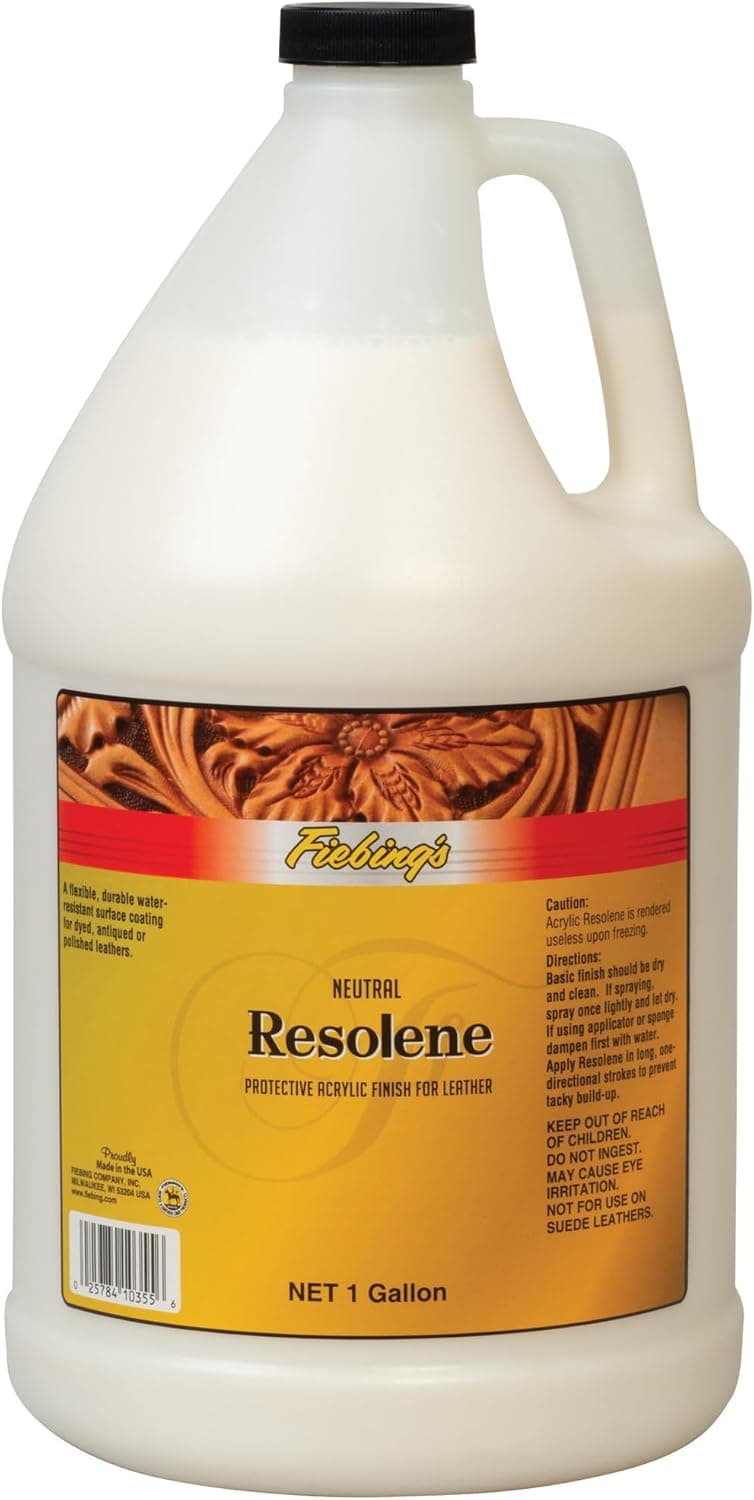
Fiebing's Resolene leather finish in a 1 gallon container (50-1921), a bulk size for shops finishing lots of leather.
Price range: See on Amazon
What we liked
- + 1 gallon size is very economical for production shops
- + Resolene is a standard acrylic top coat in leathercraft
- + Flexible finish suits belts, holsters and bags
Trade-offs
- - Far more than a hobbyist can use before it thickens
- - Large container needs decanting into smaller bottles
Who needs a full gallon of Resolene
This size is built for small shops, production leatherworkers, or serious hobbyists finishing enough belts, holsters, bags, and other dyed leather goods that a small bottle would need constant reordering. Resolene itself is one of the standard acrylic top finishes used across leathercraft, valued for adding a flexible, water resistant seal over dyed, antiqued, or polished leather without locking it stiff. Anyone making one or two projects a year is better served by Fiebing's own smaller 4oz bottle, since decanting a gallon into workable amounts adds an extra step most casual crafters would rather skip, and a gallon sitting mostly unused risks degrading before it gets used up.
What Resolene actually does to the leather
Described by Fiebing's as a flexible, durable, water resistant acrylic top finish, Resolene is applied over dyed, antiqued, or polished leather to seal and protect the surface while producing a medium to high gloss look. It is available in Neutral, Black, and Brown, and this listing is the Neutral version, which seals the surface without adding or shifting the leather's existing color, making it the safer default choice when the goal is protection rather than a color change. Because it stays flexible once dry rather than forming a rigid shell, it holds up on items that bend and flex in use, like belts and holsters, better than a stiffer varnish-style finish would.
Applying it and storing a large container
Resolene can be applied by spraying or with a damp sponge, and Fiebing's notes it dries to a mellow rather than glassy gloss without changing the leather's underlying color. Working in thin, even coats and letting each one dry before adding another gives the most even sheen and avoids pooling in tooled or carved detail. Because a gallon is a large volume to keep on a shelf, decanting a working amount into a smaller squeeze bottle or jar for daily use, while keeping the main container sealed tightly between refills, helps slow the thickening that acrylic finishes can develop over long storage periods.
Choosing this size versus smaller bottles
Against Fiebing's own 4oz Resolene bottle, or similar 4oz finishers from Angelus like their matte and satin acrylic finishers, the gallon size only makes practical sense once total finishing volume across projects adds up to many bottles' worth of product over a working year. For anyone still testing whether Resolene is the right topcoat for their leather and dye combination, a 4oz bottle is the lower-risk starting point, since an untested full gallon that reacts unexpectedly with a particular dye or leather type is a costly mistake compared to trying a small bottle first and scaling up once the results are confirmed on your own materials.
Verdict
Buy the gallon if you are finishing leather goods regularly enough that a small bottle would run out too fast, and the Neutral tone fits your need to protect the surface without shifting the leather's existing color. It suits a small production shop or a hobbyist who has already settled on Resolene as their go-to topcoat and wants to stop reordering small bottles. Start with a 4oz bottle instead if you are new to Resolene or only finish a handful of pieces a year, since a gallon left mostly unused between projects is more likely to thicken in the container before you use it all up.
Frequently asked questions
Will Resolene change the color of my leather?
The Neutral version used in this listing is designed to seal the surface without altering the leather's existing color, unlike the Black or Brown versions Fiebing's also sells.
How should I apply Resolene?
It can be sprayed on or applied with a damp sponge in thin, even coats, letting each coat dry before adding the next for the most even finish.
Is a gallon of Resolene worth it for a hobbyist?
Only if you finish enough leather goods regularly to use it before it thickens in storage. Occasional crafters are usually better served by Fiebing's smaller 4oz bottle.
Does Resolene stay flexible once dry?
Yes, it is designed to stay flexible rather than forming a rigid shell, which helps it hold up on items like belts and holsters that bend in daily use.
Prices change often, so check the current price and availability on Amazon.
Check price on AmazonLeatherwork Nest may earn a commission from the link above.