Fiebing's Acrylic Resolene (4 Ounce, Black) - Protective Acrylic Leather Finisher - Flexible, Water Resistant Top Coat Review (2026)
Updated September 20, 2026 · Research-based review
Our verdict
Fiebing's black Acrylic Resolene is a flexible, water resistant acrylic top coat that seals dyed leather with a medium to high gloss finish rather than a matte look. It works well on belts and straps in dark colorways, though the tint limits its use to dark projects and acrylic sealing reduces later oil absorption.
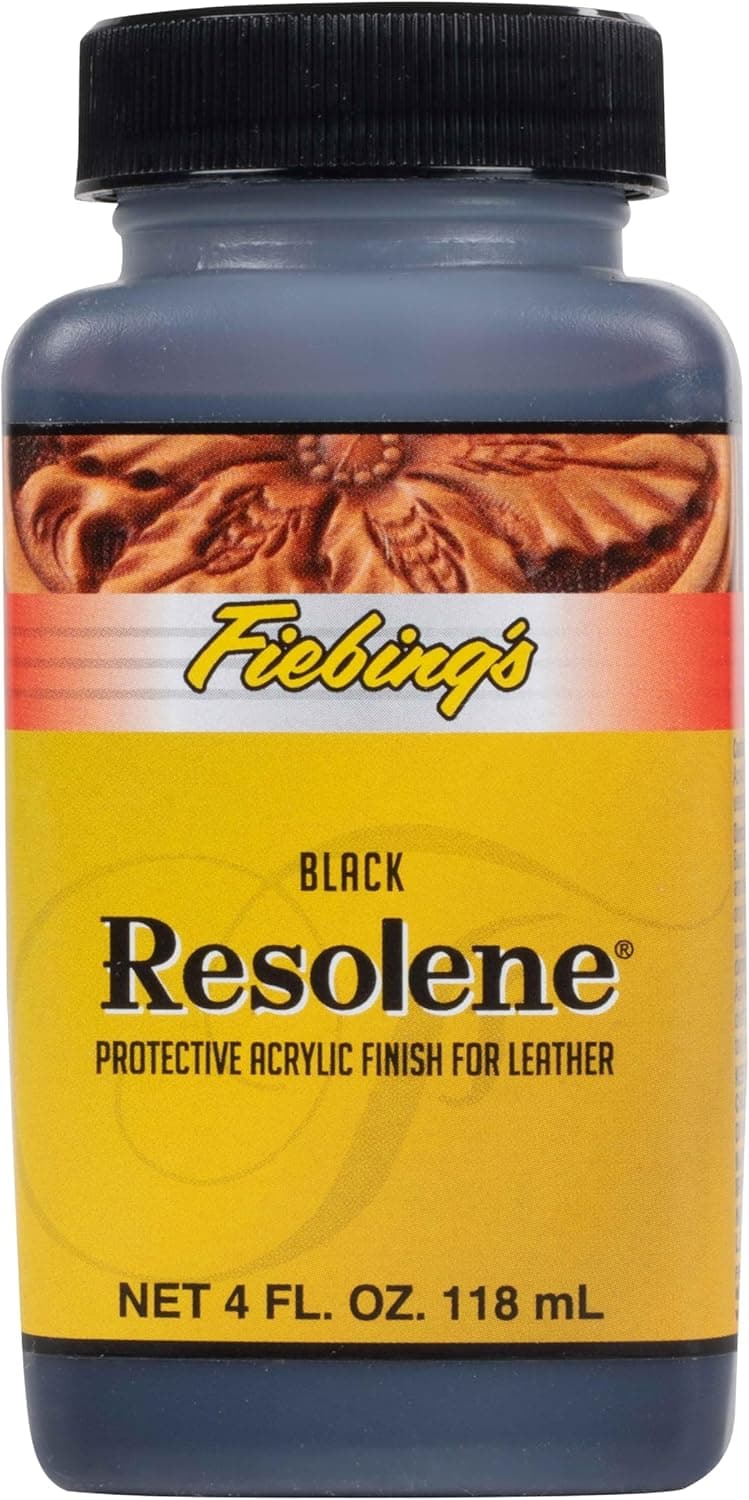
Fiebing's black Acrylic Resolene, 4 Ounce, a flexible, water resistant acrylic top coat for dyed leather.
Price range: See on Amazon
What we liked
- + Black tint deepens and seals dark dyed leather in one coat
- + Flexible acrylic finish resists cracking on belts and straps
- + Water resistant top coat helps protect dye from rub-off
Trade-offs
- - Black tint limits use to dark projects only
- - Acrylic sealers make leather less receptive to later oils
Who this finish fits
This 4 ounce black Resolene suits anyone finishing a dark dyed leather project, a black belt, wallet, or bag panel, who wants a protective top coat in the same step as tinting the surface slightly darker. Our score of 8.0 out of 10 reflects even marks of 8 across fit for the job, features, build, and value. It is best used as a final sealing step after dyeing is complete and fully dry, rather than as a first color layer, since it is a finish and light tint rather than a full strength dye. Buyers working on natural or light colored leather should choose the neutral version instead, since the black tint will darken anything it touches.
What the finish actually does
Fiebing's describes Acrylic Resolene as a flexible, durable, water resistant top finish for dyed, antiqued, or polished leather, available in neutral, black, and brown depending on the project. Rather than a flat matte seal, it produces a medium to high gloss finish once buffed, which is worth knowing if a duller look is expected, since some other leather finishers on the market are marketed specifically as matte. The acrylic film flexes with the leather as it bends, which helps it resist cracking on belts and straps that see regular movement, unlike a rigid lacquer that can flake with repeated flexing, and this flexibility is a big reason the formula remains popular for wearable goods rather than flat, stationary pieces.
How to apply it
Fiebing's instructions call for cleaning, drying, and buffing the leather first, then applying the Resolene with dry sheep wool or a lightly dampened sponge in thin, even coats rather than one heavy layer. Because it is acrylic based and forms a sealing film, leather finished with Resolene becomes less receptive to oils and conditioners applied afterward, so any conditioning should happen before sealing rather than after. On black dyed leather specifically, the black tinted version reinforces and evens out the dye color in the same pass, which can hide minor unevenness left over from the dyeing step, and letting each coat dry fully before adding another helps avoid a cloudy or streaky finish.
How it compares to other sealers in this guide
Among resolene and acrylic sealers this product ranks second of seven, behind Fiebing's own 1 gallon Resolene, which is the same formula in bulk for larger shops rather than a different finish. It scores ahead of Fiebing's Leather Sheen and Angelus's Matte and Satin acrylic finishers, both of which prioritize a different sheen level, matte or satin rather than Resolene's glossier result. In the broader leather finishes guide it ranks third of eight, reflecting that Resolene remains a strong, widely used choice but faces close competition from Angelus and Tandy's own Eco-Flo Super Shene in the same acrylic sealer category.
Bottom line
For sealing black dyed leather with a flexible, water resistant, glossy top coat, Fiebing's black Acrylic Resolene does the job well and reinforces the dye color at the same time. The tint restricts it to dark projects, and like any acrylic sealer it should go on after conditioning and dyeing are finished, not before, since it reduces how well the leather absorbs oils afterward. For belts, straps, and bags in black leather that need a durable protective finish, it remains a dependable, widely stocked choice from an established leather chemical brand.
Frequently asked questions
Does Fiebing's black Resolene give a glossy or matte finish?
It produces a medium to high gloss finish once applied and buffed, not a matte look.
Can I use this on light colored leather?
The black tint will darken any leather it touches, so light or natural colored projects should use the neutral version instead.
Can I oil or condition leather after applying Resolene?
Conditioning should be done before sealing, since the acrylic finish reduces how well the leather absorbs oils applied afterward.
How is Resolene applied?
Clean and dry the leather first, then apply thin coats with dry sheep wool or a lightly dampened sponge.
Prices change often, so check the current price and availability on Amazon.
Check price on AmazonLeatherwork Nest may earn a commission from the link above.