Choosing Your First Leather Knife
Published How we research
Walk into any leathercraft forum and ask which knife to buy first, and you will get passionate arguments for tools ranging from two-dollar box cutters to handmade round knives that cost more than a sewing machine. The honest answer is less romantic: for your first year, the best knife is almost certainly a utility knife or a snap-blade craft knife with a fresh edge. Cutting leather well is about blade sharpness and technique, not blade pedigree, and disposable blades are always sharp.
Products from this article
The highest-scoring picks from the buying guides this article links to. Scores are our editorial assessment, not customer ratings.
+ Straight blade is intended for precision cutting and thinning, and for deep, clean lines
From our guide: Best Leather Cutting Knives for Clean, Accurate Cuts at Home
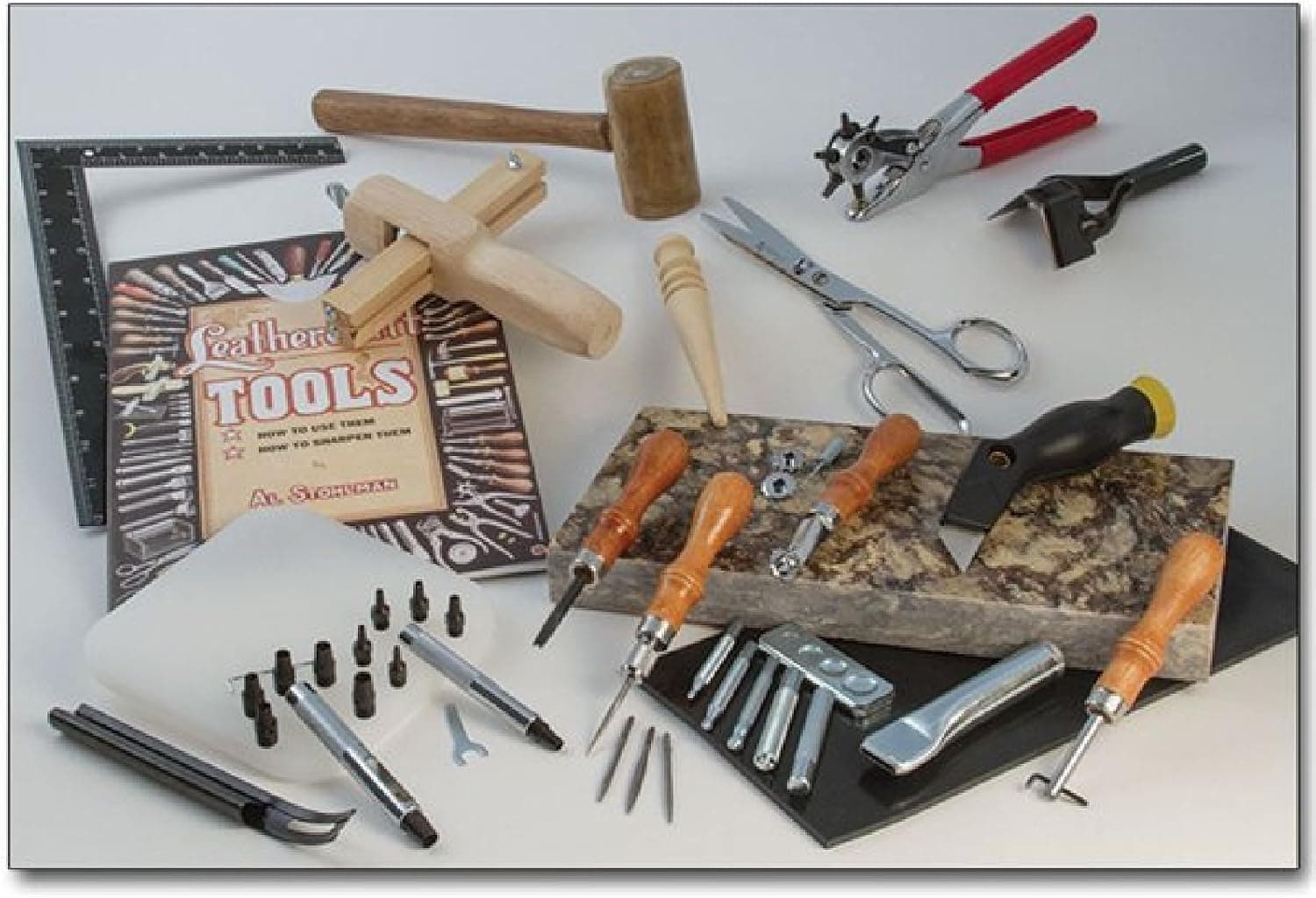
+ Tandy tools are a common starting point for new makers
From our guide: Best Leather Starter Kits for Beginners
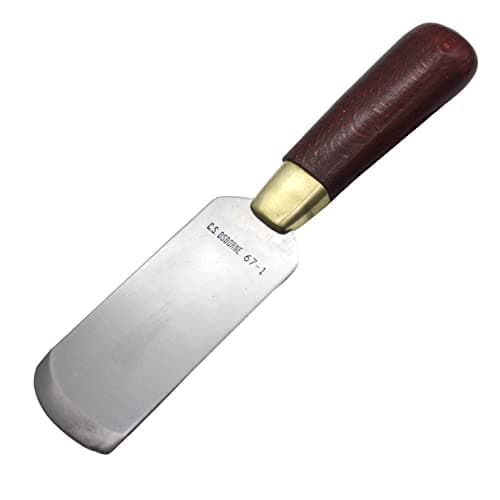
+ Same Osborne #67-1 pattern as the unavailable knife: a 4-1/8 inch by 1-1/2 inch blade with round beveled, hand sharpened edges.
From our guide: Best Leather Skiving Knives for Thin, Even Edges
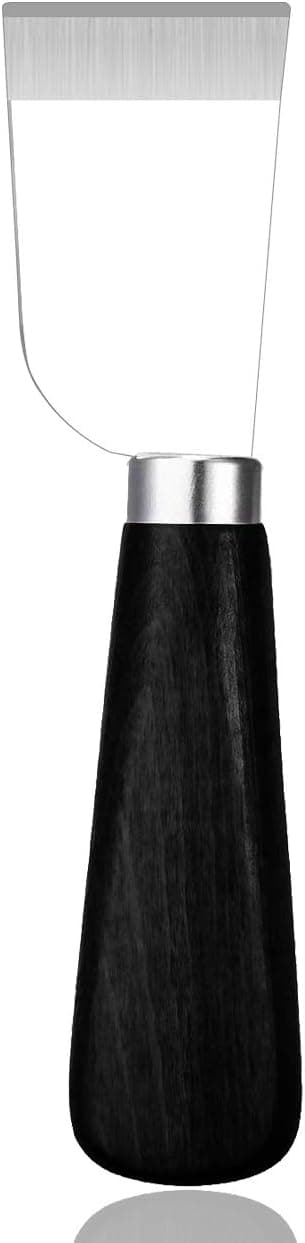
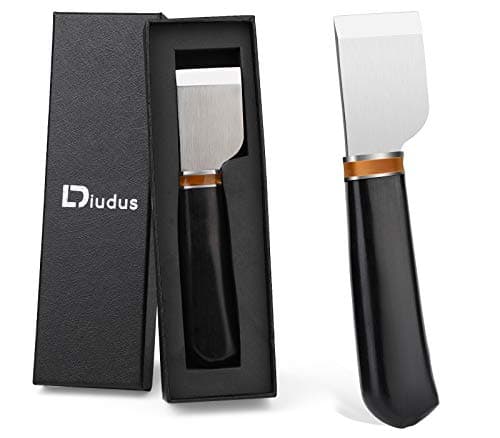
+ High-carbon steel blade paired with an ebony wood handle at a budget price
From our guide: Best Leather Cutting Knives for Clean, Accurate Cuts at Home
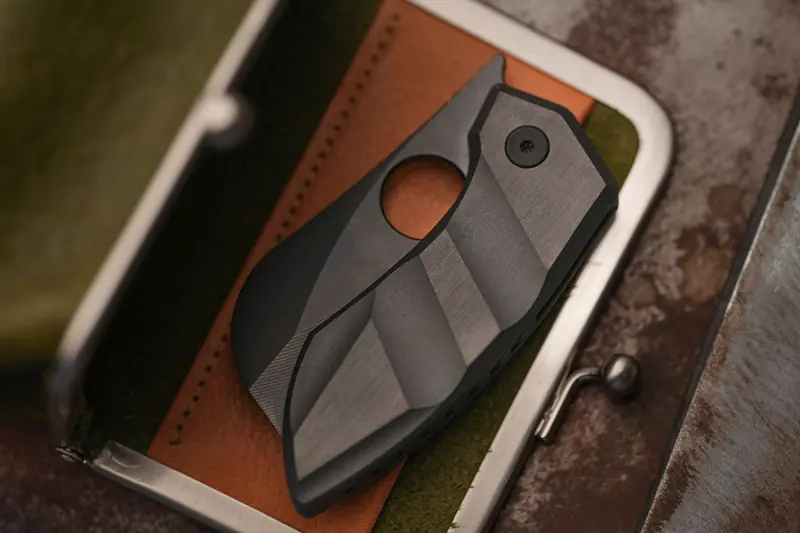
A standard utility knife handles straight cuts in everything from thin lining leather to thick bridle. Used against a steel ruler with light repeated passes, it produces clean, square edges. Its weaknesses are tight curves, where the wide blade wants to track straight, and long production sessions, where the chunky handle tires your hand. A slimmer snap-blade knife trades some stiffness for a finer point that steers through curves more willingly. Between those two designs, most beginner projects are fully covered for a few dollars.
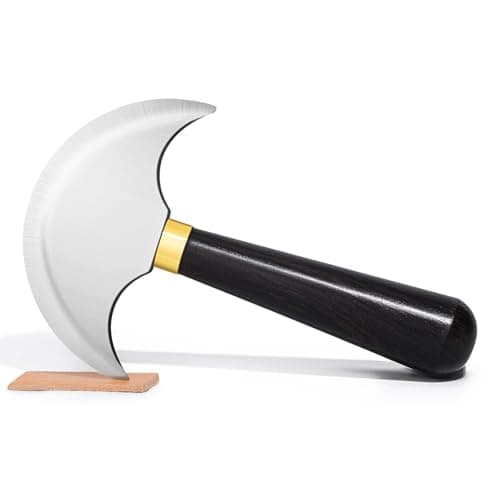
The classic leather knife is the round or head knife, a half-moon blade pushed through the leather rather than dragged. In skilled hands it cuts straights, curves, and skives with one tool, and it is genuinely a joy to use. It is also genuinely a poor first knife. It requires sharpening skill from day one, it punishes sloppy hand position, and a dull round knife is both dangerous and useless. Treat it as a second-year purchase that you earn by learning to sharpen.
Japanese-style skiving knives, with a flat single-bevel blade, occupy a useful middle ground. They cut straight lines beautifully, handle skiving duties, and teach sharpening on simple flat geometry. If you want one nice fixed blade early on, this style gives the most capability per unit of maintenance skill. Pair it with a strop and it will stay working sharp for a long time between real sharpening sessions.
Whatever you cut with, the supporting cast matters as much as the knife. A self-healing cutting mat protects both blade and table. A thick steel ruler, ideally with a cork or rubber backing so it does not skate, turns an average knife into a precision instrument. And a simple leather strop with polishing compound extends the life of every edge you own, including disposable blades, which respond to stropping far better than most people expect.
The habit that separates clean work from ragged work is embarrassingly simple: change or refresh the blade sooner than feels necessary. Leather, especially veg-tan, dulls edges quickly, and a slightly dull blade drags, stretches the leather, and wanders off your line. Blades are the cheapest component in your entire workshop. When a cut starts requiring pressure, stop pressing and start stropping, or snap the blade and continue with a fresh one. Your edges, and your fingers, will both be safer for it.
Popular right now
- Setting Rivets and SnapsArticle
- Best Pricking Irons for Clean, Slanted Saddle StitchesBuying guide
- Best Gum Tragacanth and Burnishing Agents for Leather EdgesBuying guide
- How to Dye Leather EvenlyArticle
- Hand Stitching vs Machine Stitching LeatherArticle
- How to Stop Leather Dye From Rubbing OffArticle
Based on the last 28 days of search and visitor data.