How to Tell Real Leather from Fake: Simple Checks for Look, Feel, Smell and Edges
Published How we research
To tell real leather from fake, look at the grain and the edges, feel how it flexes and warms in your hand, check the back or underside for fibers, and read the label for terms such as faux, vegan, PU or bonded. Real leather has an irregular surface with small pores and slight variations, while most imitation material has a repeated, even pattern. No single test is perfect, and good fakes can fool you. Combining several checks gives a better answer. This article lists the most useful ones and explains which methods to avoid, since some can damage the item.
Products from this article
The highest-scoring picks from the buying guides this article links to. Scores are our editorial assessment, not customer ratings.
As an Amazon Associate we earn from qualifying purchases. This does not change our picks. Affiliate disclosure
New to Prime? Try Prime free for fast, free shipping on eligible items.
+ Springfield Leather is a long-standing leather supplier with steady stock
From our guide: Best Veg Tan Leather for Tooling, Carving, and Home Leathercraft
+ Whole hide in the 7 to 9 sq ft range, enough for a larger handbag or several small goods from one continuous piece
From our guide: Best Chrome Tan Leather for Bags, Garments, and Soft Goods
+ 20 Lbs of remnants supplies a craft booth or class for months
From our guide: Best Leather Scraps and Remnant Bags for Practice and Small Projects
+ 12"x24" size yields several sheaths or a full holster from one piece
From our guide: Best Veg Tan Leather for Tooling, Carving, and Home Leathercraft
Start with the label and the description
Words matter. Terms like faux leather, vegan leather, PU, polyurethane, PVC, pleather and leatherette describe synthetic materials. Bonded leather and leather match contain real leather fibers but are reconstituted. Genuine leather means real hide but not necessarily high quality.
If the label only says made with leather or does not state the material, that is a hint to ask. Reputable sellers normally describe the type, the grain and the thickness. Missing information is not proof of fakery, but it deserves a closer look.
Look at the grain and surface
Real leather shows natural variation: uneven pores, small wrinkles, tiny scars and slightly different tones across the surface. Synthetic leather often has a perfectly repeated pattern, like a printed texture, with lines and bumps that look identical.
Sanded or heavily coated leather can look more uniform, so this check is not decisive. Look at several areas, especially away from edges. Bright light at an angle helps to show whether the pattern repeats.
Check the edges and the back
Cut edges of real leather look fibrous and slightly rough, with layered fibers visible under magnification. Synthetic material often has a plastic or fabric layer, with a smooth, sharp edge and a woven or foam backing.
The underside of real leather has a suede like or fuzzy texture. Fake leather usually shows a fabric weave or a flat plastic surface. If a bag or jacket has a lining, look at hidden seams or the inside of straps for a peek at the material.
Feel, flex and temperature
Press a finger into the surface. Real leather tends to wrinkle in a natural, fine pattern, like skin, and the creases move as you flex. Synthetic leather tends to stretch or form larger, more uniform ripples, and it springs back.
Real leather also warms in your hands and feels slightly textured. Plastic coverings can feel cool and smooth for longer. These are general tendencies, and finished leather can feel plastic like, so use them as clues rather than proof.
Smell and behavior with water
Real leather has a characteristic natural smell, which can vary depending on the tanning method. Synthetic material often smells of chemicals or plastic. Scented products can mask this, so smell alone is unreliable.
A drop of water usually soaks in slowly on unfinished leather and may darken it, while most synthetic materials let it bead on top. Finished leather also resists water, so this is not conclusive and should be tested only on a hidden spot.
Tests to avoid
Burning a piece of the material is sometimes suggested online, but it is a fire hazard, releases fumes and ruins the item. It is not recommended. Cutting or scratching a visible spot is also unwise.
If you need certainty, ask a specialist or a trusted supplier. For items you plan to buy for crafting, request a swatch and examine the flesh side, edge and thickness before ordering a whole hide.
What this means for leathercraft
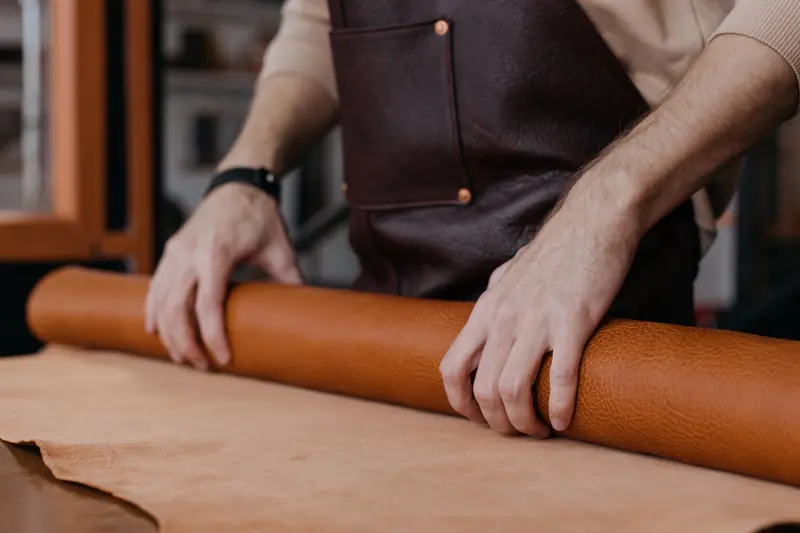
Real veg tan leather is easy to tell from fake because it takes stamping, wet molding and burnishing, while synthetics do not. Check supplier descriptions for the tannage and thickness and buy from sources that are open about their hides.
If you want to learn what good leather feels like, handle samples at a craft supplier, and compare them with a synthetic piece side by side.
What the different imitations look like
Polyurethane faux leather is soft and flexible, and often has a printed grain. PVC versions are stiffer and shinier. Microfiber leather alternatives mimic suede. Plant based or vegan leathers are made from materials such as plastics combined with fibers, and performance varies by maker.
Each of these can be a good product when sold honestly. The main issue is the label. Knowing the differences helps you buy what you actually want and care for it correctly.
Care differences once you know
Real leather generally benefits from cleaning and conditioning, while synthetic materials usually need only a damp cloth and mild soap. Conditioning a faux material does little and can leave a sticky film.
If you are unsure which you have, start with the gentlest method and test any product on a hidden area. Peeling or flaking coatings are a common sign of a synthetic layer wearing out.
Asking the seller the right questions
Ask what animal the leather comes from, which part of the hide is used, how it was tanned, how thick it is and whether it has been coated. A knowledgeable supplier can answer these easily.
Request clear photos of the edge and the back. If the answers are vague or the listing avoids the word leather entirely, treat that as a signal to be careful.
Summary checklist
Read the label, inspect the grain for natural irregularity, look at cut edges for fibers, check the back for a fabric or suede like layer, and notice how the surface creases. Use several signs together, because any single test can mislead, and finished or heavily coated leather can imitate synthetic traits while good fakes imitate leather.
Skip the burn test and other risky methods. If an item is important or expensive, ask the seller or a leather professional before deciding.
Popular right now
- Setting Rivets and SnapsArticle
- Best Pricking Irons for Clean, Slanted Saddle StitchesBuying guide
- Best Gum Tragacanth and Burnishing Agents for Leather EdgesBuying guide
- How to Dye Leather EvenlyArticle
- Choosing Your First Leather KnifeArticle
- Hand Stitching vs Machine Stitching LeatherArticle
Based on the last 28 days of search and visitor data.