Making Leather Templates
Published How we research
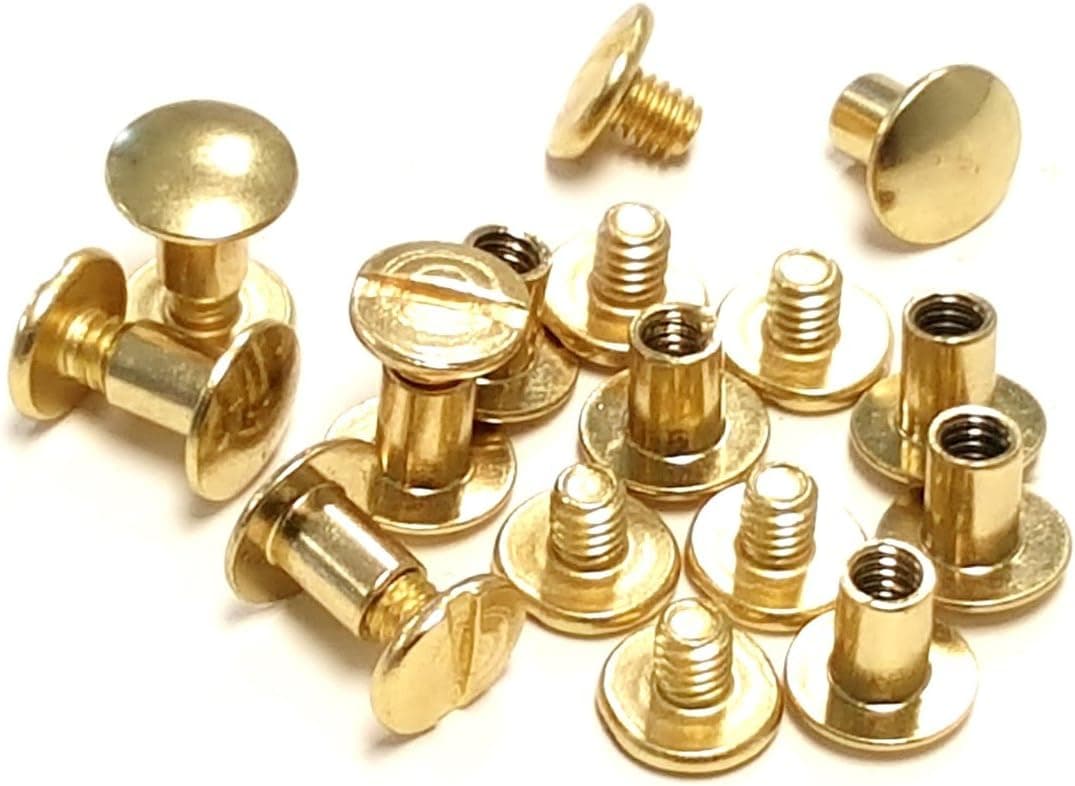
The difference between a leatherworker who can make one good wallet and one who can make ten identical good wallets is not skill with a knife; it is templates. A template moves every difficult decision, dimensions, curves, hole placement, hardware position, out of the moment of cutting and into a calm design stage where mistakes cost paper instead of leather. Any project worth making twice is worth a template, and most projects worth making once are too, because the template is where the design errors get caught.
Products from this article
The highest-scoring picks from the buying guides this article links to. Scores are our editorial assessment, not customer ratings.
+ Punch and screwdriver included for full installation
From our guide: Best Chicago Screws for Leather Projects
+ Tandy tools are a common starting point for new makers
From our guide: Best Leather Starter Kits for Beginners
+ 10 Sizes from 0.5-5.0mm cover tiny stitch holes to belt holes
From our guide: Best Leather Hole Punches for Belts, Straps, and Hardware
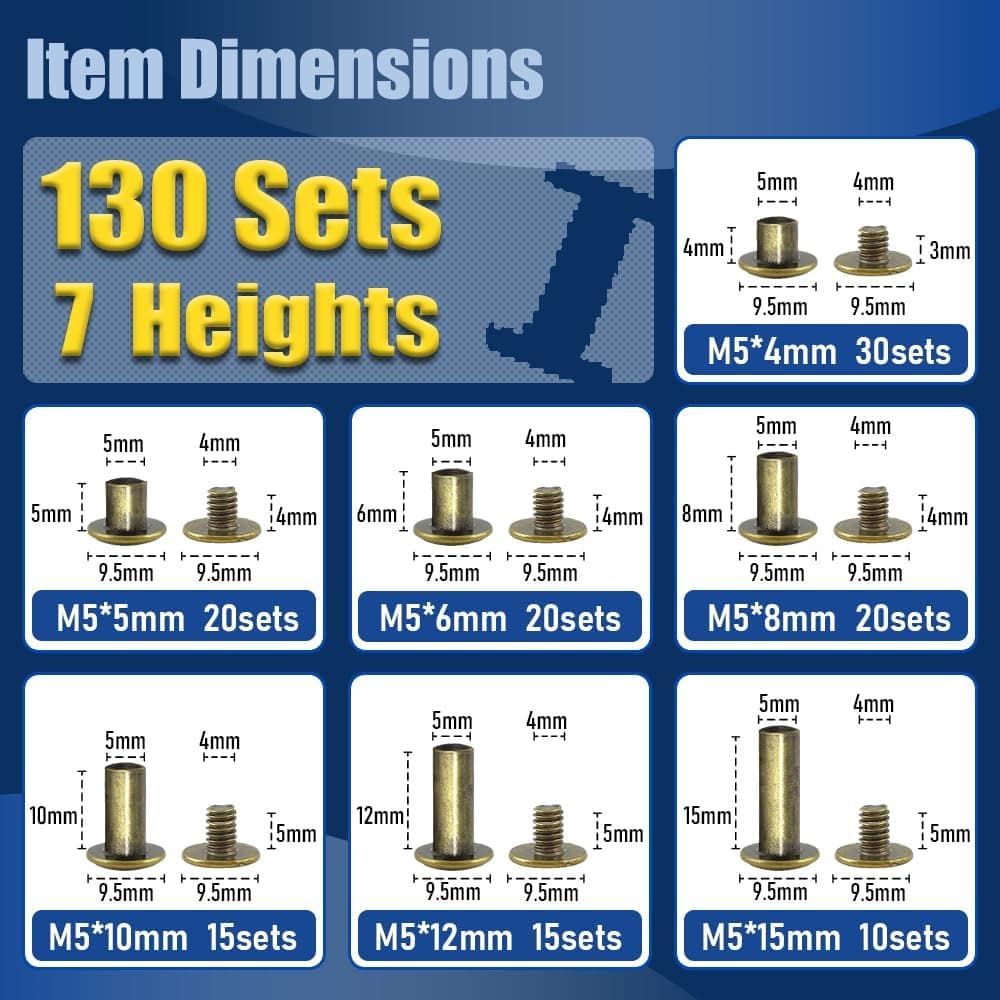
+ 7 sizes handle nearly any leather stack thickness
From our guide: Best Chicago Screws for Leather Projects
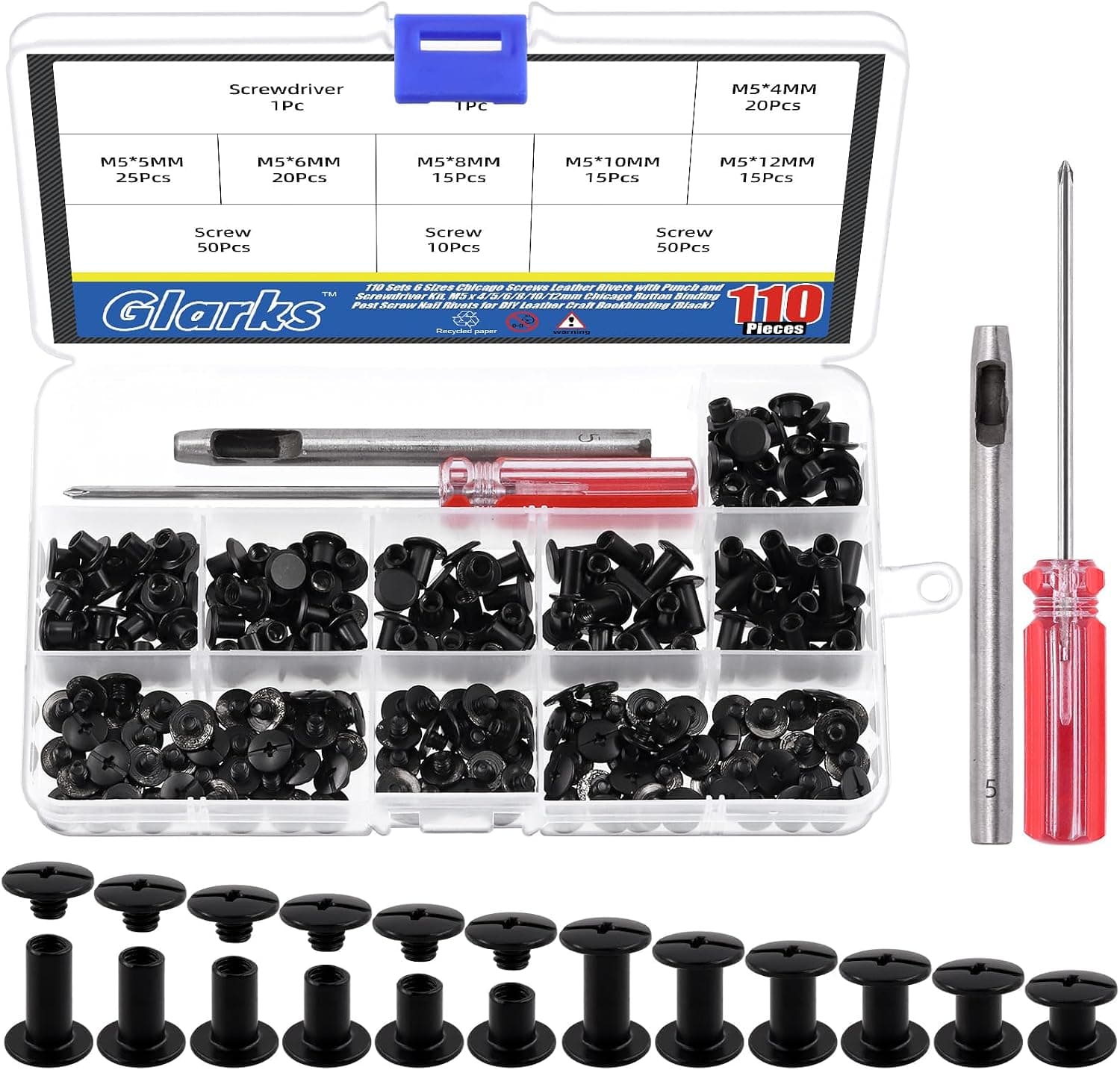
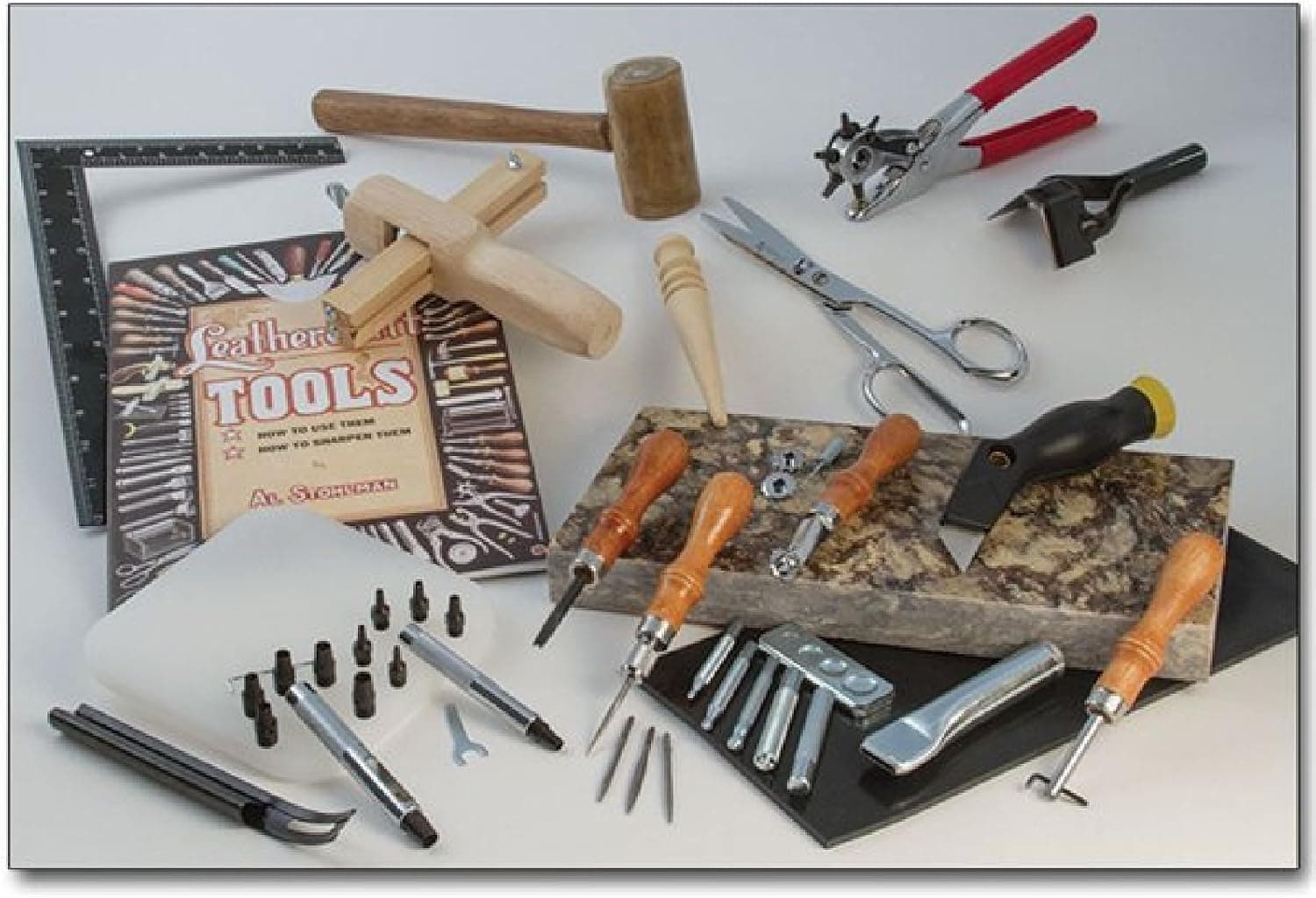
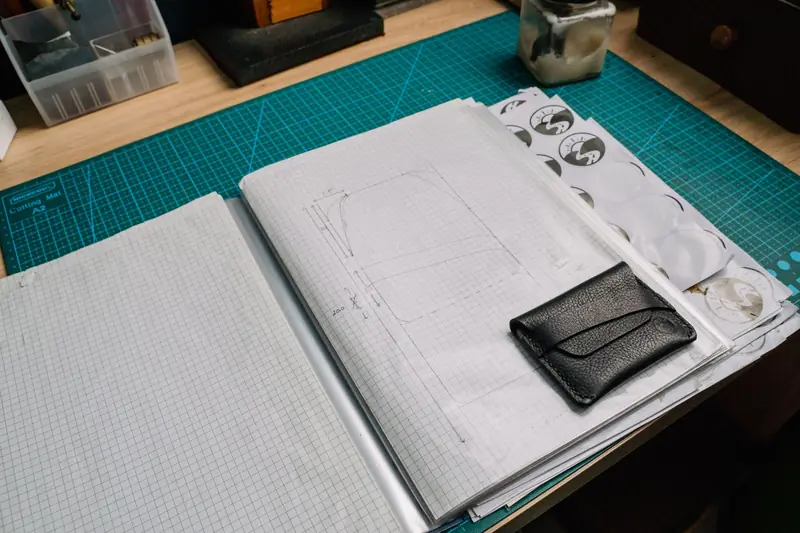
The workflow starts in paper, always. Sketch the piece, draw it at full scale on card stock or print a PDF pattern, cut it out, and physically assemble the mockup with tape. Fold what will fold, stack what will stack, and load the mockup with the real cards, the real knife, the real strap hardware. Paper reveals the pocket that is 4 mm too shallow and the flap that will not clear the buckle, and it reveals them for free. Only when the paper version works does the design earn promotion to a durable template.
Durable means something a knife can ride against. The accessible choice is 1 to 2 mm card or plastic sheet from packaging, cut cleanly and labeled; it survives dozens of uses. The serious choice is 3 mm acrylic, cut by hand with a scoring tool, or laser cut if you have access, which turns each template into a rigid jig that will outlive the maker's interest in the design. Acrylic earns its cost on anything produced repeatedly, because the knife tracks its edge perfectly and the template never develops the soft, rounded corners that degrade card patterns over time.
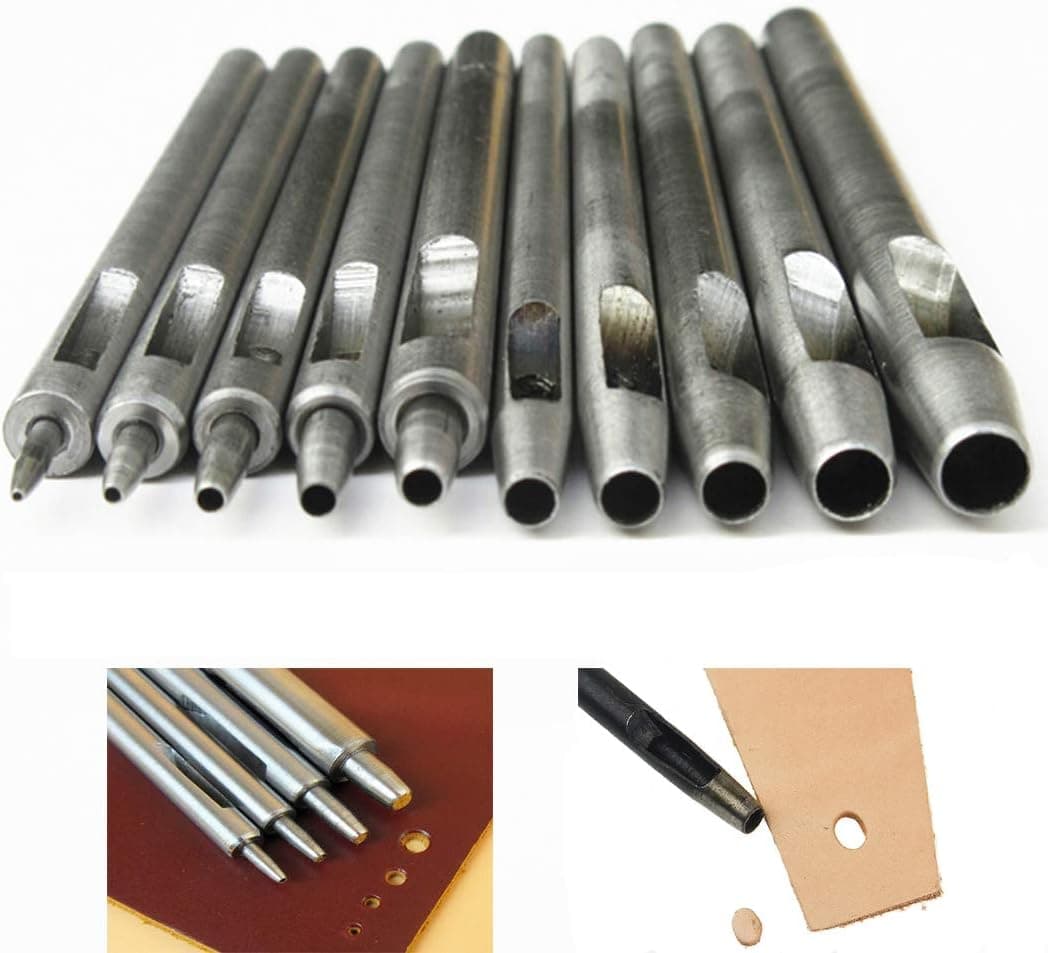
A good template carries more information than its outline. Drill or punch small holes at stitch line reference points, hardware centers, fold lines, and pocket positions, so a scratch awl can transfer them through the template onto the leather in seconds. Add registration marks where pieces align during assembly, and label each template with the project name, the piece name, the intended leather weight, and the version number. That last item sounds bureaucratic until version three of a wallet exists and the unlabeled templates from versions one and two are still in the drawer, indistinguishable.
In use, place templates to respect the hide as well as the pattern. Orient pieces so length runs along the firm backbone direction where stretch is lowest, keep load-bearing straps out of stretchy belly zones, and nest pieces to minimize waste before anything is traced. Trace with a scratch awl or a fine scribe rather than ink, cutting just outside the line and trimming to it. When a cut piece comes out wrong despite the template, update the template before making anything else; the template is the single source of truth, and letting corrections live only in your memory guarantees repeating the error.
Store templates flat in labeled envelopes or hung on rings, and back up the designs digitally, photograph card templates or keep the vector files for acrylic ones. A shelf of proven templates quietly becomes the most valuable asset in the workshop: it is the difference between owning some tools and owning a product line, and it is what makes gift season, custom orders, and eventually selling work feel routine instead of heroic.
Popular right now
- Setting Rivets and SnapsArticle
- Best Pricking Irons for Clean, Slanted Saddle StitchesBuying guide
- Best Gum Tragacanth and Burnishing Agents for Leather EdgesBuying guide
- How to Dye Leather EvenlyArticle
- Choosing Your First Leather KnifeArticle
- Hand Stitching vs Machine Stitching LeatherArticle
Based on the last 28 days of search and visitor data.