Sharpening Leather Tools
Published How we research
Most cutting problems in leathercraft are dull tools, and leather tools are simple to sharpen because most have flat bevels and short edges. The foundation is the strop, a piece of veg-tan glued to a board and charged with green chromium oxide compound: drag the blade backward, edge trailing, before every session. When stropping stops reviving the edge, use a 1000/4000 waterstone: work the flat bevel until a burr forms, remove it on the fine side, then finish on the strop. Angle consistency matters more than angle choice. Every cutting problem in leathercraft eventually traces back to sharpness. Ragged edges, stretched cuts, torn skives, and chattering edge bevelers are all symptoms of the same disease, and no technique adjustment fixes them. Learning a basic sharpening routine is therefore not an optional side quest; it is a core leathercraft skill that pays off every single session. The good news is that leather tools are simple to sharpen compared to kitchen knives, because most have flat bevels and short edges.
Products from this article
The highest-scoring picks from the buying guides this article links to. Scores are our editorial assessment, not customer ratings.
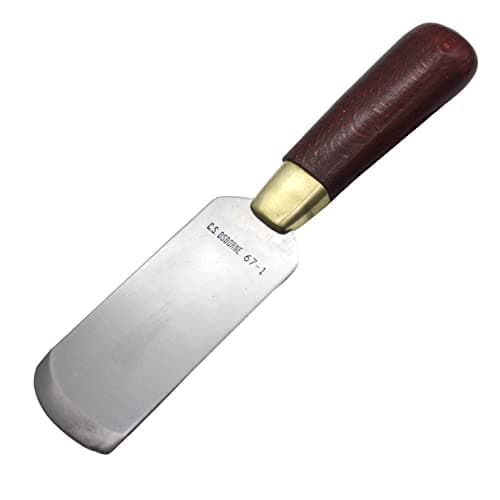
+ Same Osborne #67-1 pattern as the unavailable knife: a 4-1/8 inch by 1-1/2 inch blade with round beveled, hand sharpened edges.
From our guide: Best Leather Skiving Knives for Thin, Even Edges
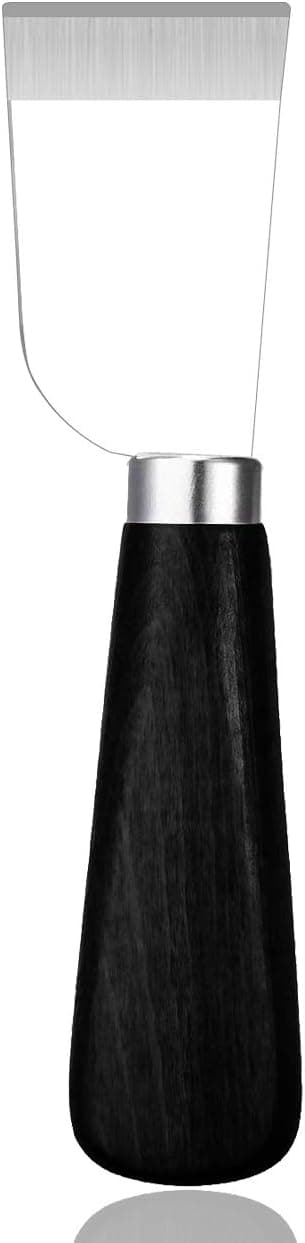
+ Straight blade is intended for precision cutting and thinning, and for deep, clean lines
From our guide: Best Leather Cutting Knives for Clean, Accurate Cuts at Home
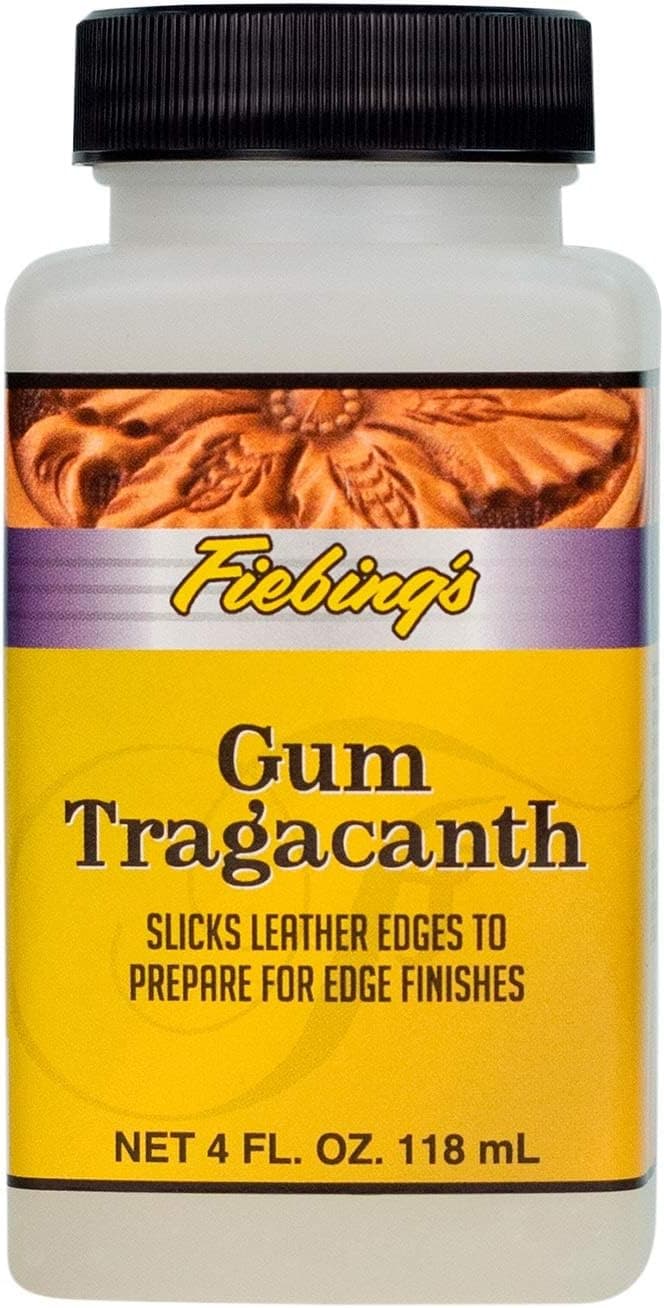
+ Helps veg tan edges burnish to a slick finish
From our guide: Best Gum Tragacanth and Burnishing Agents for Leather Edges
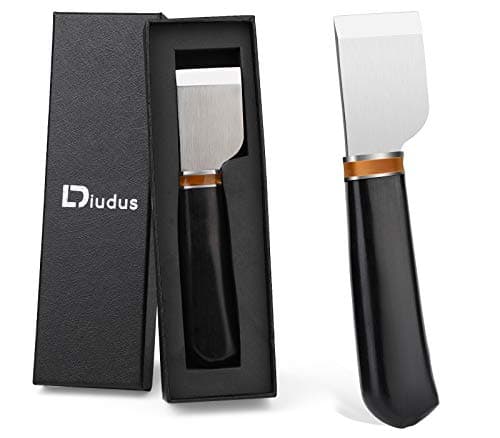
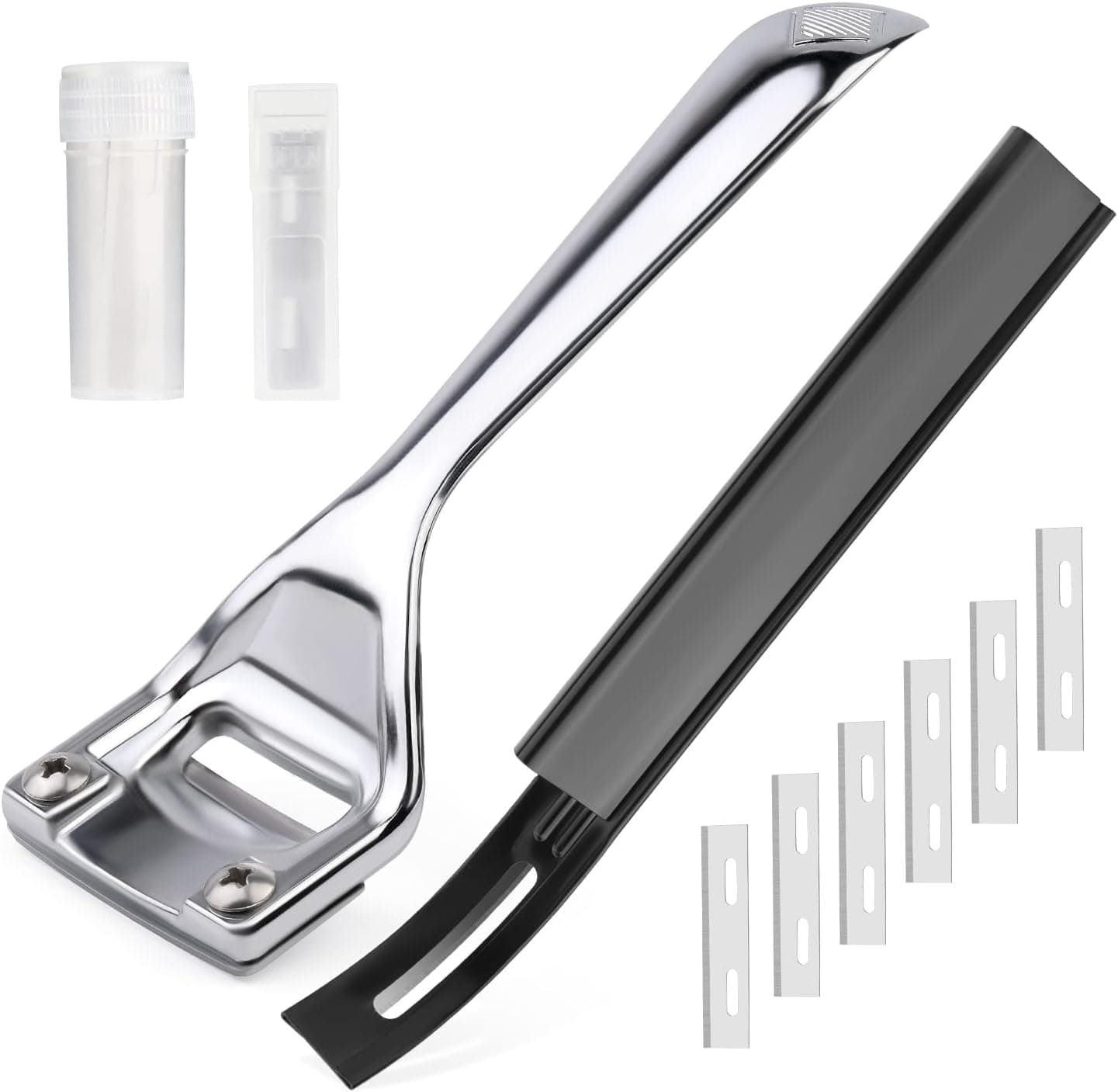
+ 6 spare blades mean you swap rather than sharpen
From our guide: Best Leather Skiving Knives for Thin, Even Edges
The foundation is the strop, not the stone
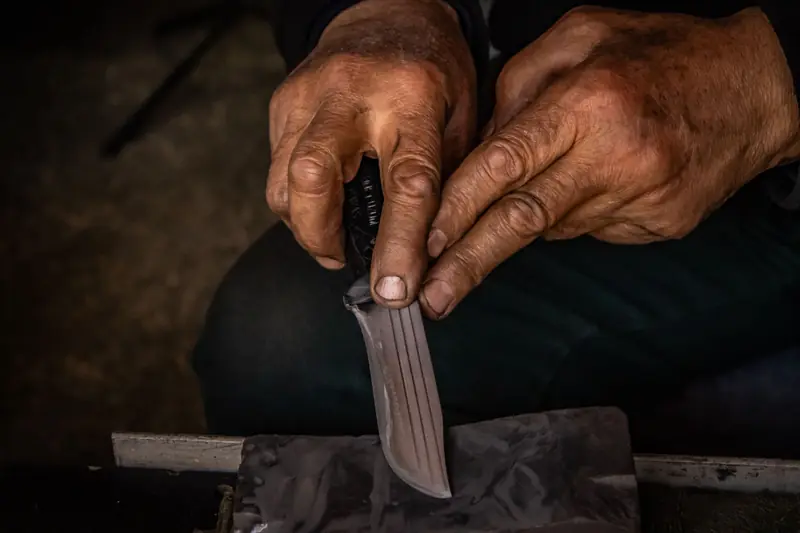
The foundation of the routine is the strop, not the stone. A strop is just a piece of veg-tan leather glued flesh-side up to a board and charged with fine polishing compound, usually a green chromium oxide bar. Dragging a blade backward along the strop, edge trailing, realigns and polishes the edge without removing meaningful metal. Stropping before every session, and again whenever a cut starts to drag, keeps a good edge working sharp for weeks. Most beginners reach for a stone far too often and a strop far too rarely.
When stropping stops working: the stones
When stropping stops reviving the edge, you need actual abrasive. A two-sided waterstone around 1000 and 4000 grit covers nearly everything, though budget diamond plates or even wet-dry sandpaper on glass work fine. For a flat-bevel knife, lay the bevel flat on the stone, feel it register, and push forward in smooth strokes while keeping the angle locked. Work the coarse side until you can feel a tiny burr along the opposite face, flip to remove it on the fine side, then finish on the strop until the edge shaves arm hair or slices newspaper cleanly.
Sharpening edge bevelers and shaped tools
Edge bevelers and other shaped tools scare people because the edge is curved or grooved, but the principle is identical: abrade the bevel, remove the burr, polish. The trick is to match the abrasive to the shape. Fold wet-dry sandpaper over a dowel or pull a cord charged with compound through the groove of the beveler. A few dozen light pulls restore a beveler that has started tearing instead of slicing. Round knives are sharpened like straight knives but with a rocking sweep to cover the curved edge, which is exactly why they make poor first tools.
Angle consistency matters more than angle choice
Angle consistency matters more than angle choice. Whether your knife bevel sits at 12 degrees or 20, holding it steady through every stroke produces a crisp edge, while wobbling between angles rounds the edge over and makes it duller than when you started. If you struggle to hold an angle, color the bevel with a marker and check where the stone removes ink; it gives instant feedback on what your hands are actually doing.
Build sharpening into your workflow
Build sharpening into your workflow instead of treating it as an emergency repair. Strop at the start of each session, strop again mid-session on long cutting days, and visit the stones perhaps once a month under normal hobby use. Sharp tools are safer because they cut with less force, they make every technique easier to learn, and they turn cutting and skiving from a struggle into one of the most satisfying parts of the craft.
Frequently asked questions
How do I keep my leather knife sharp? Strop it before every session, edge trailing, on a compound-charged strop. That keeps a good edge working sharp for weeks; most beginners reach for a stone far too often and a strop far too rarely.
What stones do I need for leather tools? A two-sided waterstone around 1000 and 4000 grit covers nearly everything, though budget diamond plates or wet-dry sandpaper on glass also work.
How do I sharpen an edge beveler? Same principle as a knife, matched to the shape: fold wet-dry sandpaper over a dowel or pull a compound-charged cord through the groove. A few dozen light pulls restore one that has started tearing.
Does the sharpening angle matter? Consistency matters more than the exact angle. Holding the bevel steady through every stroke produces a crisp edge; wobbling between angles rounds it over and makes it duller than when you started.
Popular right now
- Setting Rivets and SnapsArticle
- Best Pricking Irons for Clean, Slanted Saddle StitchesBuying guide
- Best Gum Tragacanth and Burnishing Agents for Leather EdgesBuying guide
- How to Dye Leather EvenlyArticle
- Choosing Your First Leather KnifeArticle
- Hand Stitching vs Machine Stitching LeatherArticle
Based on the last 28 days of search and visitor data.