Stitching Chisel and Pricking Iron Size Chart: 2.7 mm to 6 mm
Published How we research
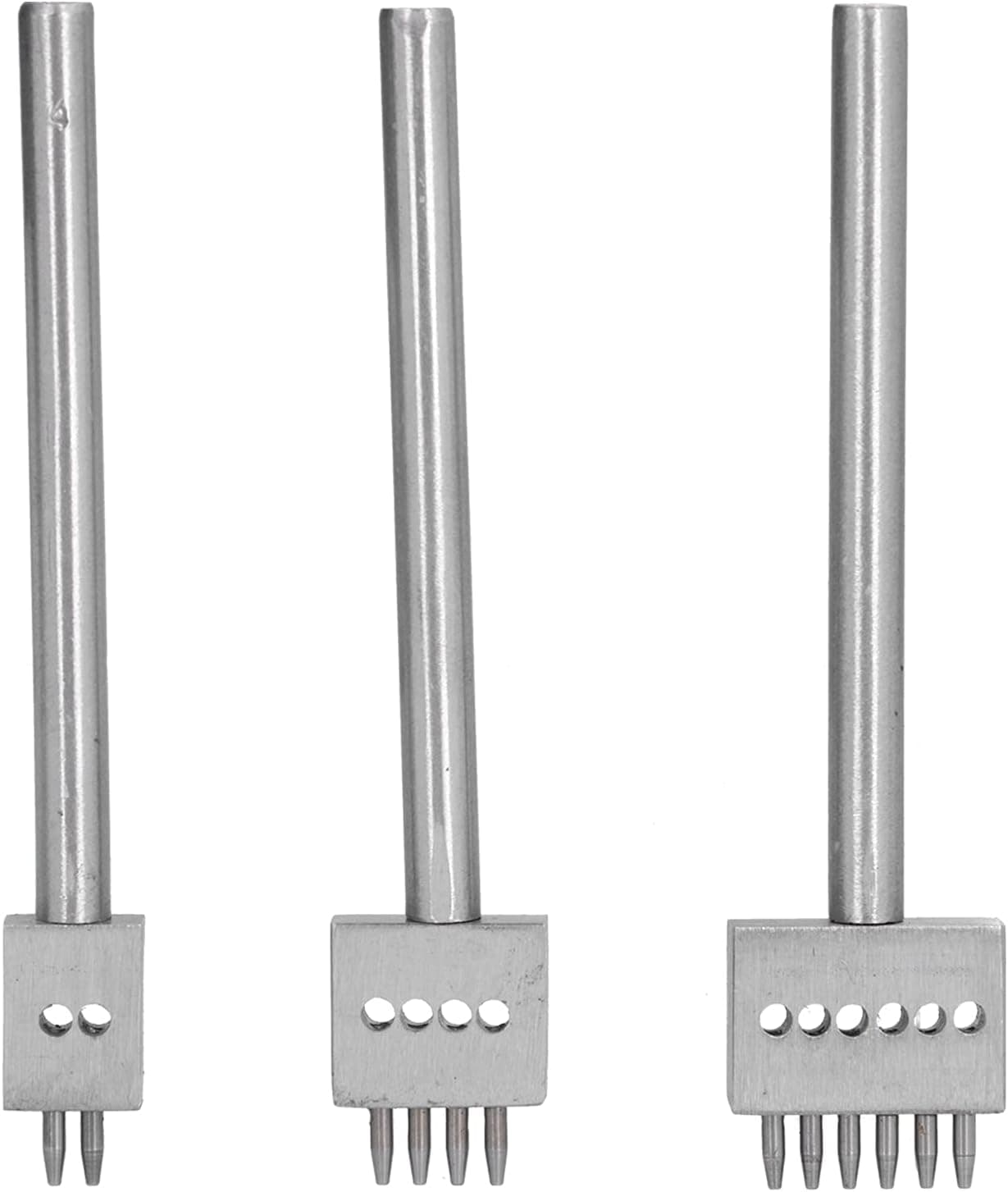
Stitching chisels and pricking irons are sized by pitch, the distance from one tooth to the next, and most leatherwork falls between 2.7 mm and 6 mm. Fine goods like watch straps and card wallets use 2.7 to 3.38 mm, bags and notebook covers use 3.85 to 4 mm, and belts, sheaths and tack use 4 to 6 mm. The pitch sets how many stitches fit in an inch, which in turn decides what thread thickness looks right. This chart covers the common sizes, the stitches per inch each one gives, the thread and needle to pair with it, and how prong counts fit in.
How chisel and iron sizes are measured
The number on a stitching chisel or pricking iron is its pitch: the distance from the tip of one tooth to the tip of the next. A 4 mm chisel makes holes 4 mm apart, center to center, no matter how many teeth it has. A smaller pitch means shorter stitches and more of them per inch.
Not every maker measures the same way. Some Japanese diamond chisels are labeled by the width of the tooth or the gap between teeth instead of the tip to tip distance, so a tool marked 2 mm can punch holes roughly 4 mm apart. Before buying, read the listing for the words pitch or spacing. If you already own the tool, press it lightly into scrap several times in a row, measure the distance covered by ten gaps between holes and divide by ten. That figure is the one to use with the chart below.
French style pricking irons often come in sizes that look odd in millimeters: 2.7, 3.0, 3.38 and 3.85 mm. They come from the old French system of stitches per Paris inch, which is about 27 mm long. Size 10 is 2.7 mm, size 9 is 3.0 mm, size 8 is 3.38 mm and size 7 is 3.85 mm.
Size chart: pitch, stitches per inch and typical projects
To convert any pitch to stitches per inch (SPI), divide 25.4 by the pitch in millimeters. The common sizes work out as follows, from the finest to the boldest.
2.7 mm is about 9.4 SPI: the finest common size, used for watch straps, slim card holders and other small goods in thin leather. 3.0 mm is about 8.5 SPI: a fine all-round size for wallets, card cases and passport covers. 3.38 mm is about 7.5 SPI: a popular wallet and small bag size that still looks refined but is quicker to sew.
3.85 mm is about 6.6 SPI and 4 mm is about 6.4 SPI: the general purpose sizes for bags, notebook covers, larger wallets, dog collars and lighter belts. 5 mm is about 5 SPI: suited to belts, knife sheaths, holsters and tool pouches in heavy veg tan. 6 mm is about 4.2 SPI: a bold, rugged stitch for thick straps and tack.
If you are buying one set to start, 4 mm is the safest choice for mixed projects. Pick 3 mm or 3.38 mm as a first size instead if you mainly plan to make wallets and card holders.
Matching thread and needles to the spacing
Thread thickness has to grow with the pitch. Thin thread at a wide spacing looks sparse and weak, and thick thread at a fine spacing crowds the holes and makes the seam pucker. These pairings are the usual starting points: 2.7 to 3.0 mm pitch with thread around 0.35 to 0.45 mm, 3.38 mm with 0.45 to 0.55 mm, 3.85 to 4 mm with 0.55 to 0.65 mm, 5 mm with about 0.8 mm, and 6 mm with 1.0 mm or thicker.
Treat those as ranges, not rules. Thread at the thick end of a range gives a bolder, more rustic line, and thread at the thin end looks neater and more formal. Leather thickness matters too: a seam through two layers of thin lining leather cannot hide a 0.8 mm thread, however wide the spacing.
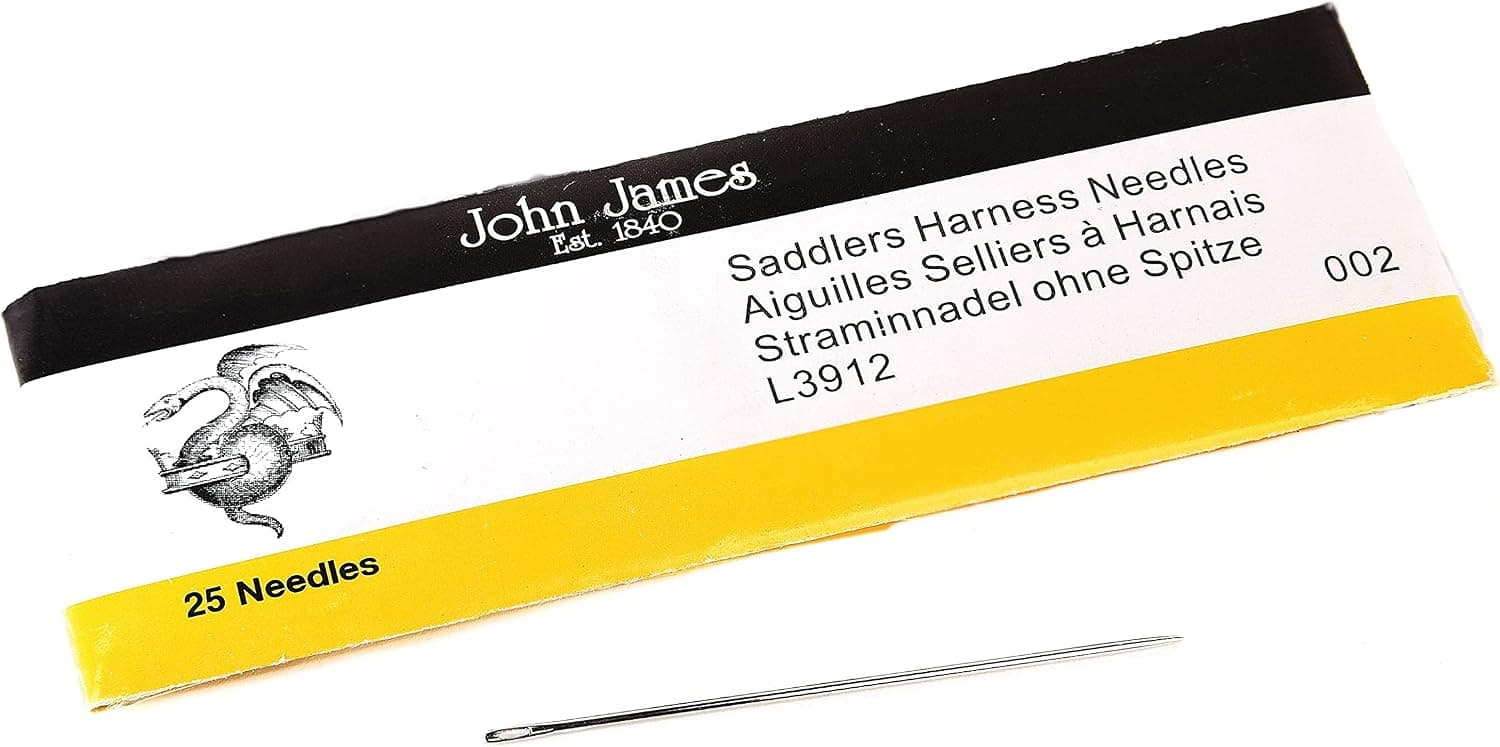
For needles, use blunt harness needles sized to the thread. In the widely used John James saddler's range, size 004 suits fine threads up to roughly 0.6 mm, and the larger size 002 suits threads from about 0.6 to 1.0 mm. The eye should take the thread without shredding it, and the needle should pass through the hole with light resistance.
Pricking iron or stitching chisel: does the type change the size?
The pitch means the same thing on both tools, but they are used differently. A diamond stitching chisel has stout teeth and is driven all the way through the leather, so the hole is finished in one strike. A traditional pricking iron only marks slanted slits on the surface, and each hole is then opened with a diamond awl as you sew. Many modern French style irons have long, slim teeth and are punched right through thin goods, which blurs the line between the two.
The tooth shape changes how a given pitch looks. Diamond chisel holes are wider, so they suit thicker thread and hide small errors. The flat, angled slits of a pricking iron close up around the thread and give the tight slanted stitch seen on fine wallets, but they show every mistake in tension. At the same pitch, expect to use slightly thinner thread with a pricking iron than with a diamond chisel.
How many prongs you need
Prong count does not change the spacing, only how many holes each strike makes. A typical set has a 2 prong tool and a larger one with 4 to 6 prongs, and some add a single prong. Use the large tool for straight runs, the 2 prong tool to walk around curves, and a single prong or an awl for corners and the last hole before an edge.
To keep spacing even from strike to strike, set the first tooth of the chisel into the last hole you made, then strike. On curves, turn the 2 prong tool so both teeth sit on the marked line. If a run will not finish evenly at a corner, lay the chisel on the line without striking first and adjust the last few holes by eye with the 2 prong tool. A small change spread over three or four stitches is invisible.
Choosing a size by leather thickness
Thin leather wants a fine pitch and thick leather wants a wide one. As a working guide, a finished seam under about 2 mm thick suits 2.7 to 3.38 mm spacing, seams from 2 to 4 mm suit 3.38 to 4 mm, and seams thicker than 4 mm suit 4 to 6 mm. Long stitches on thin leather leave the layers free to gape between holes. Very short stitches in thick leather put the holes so close together that the leather between them is weakened.
Keep one spacing across a whole project where you can. A 3 mm pocket seam next to a 4 mm outer seam on the same wallet tends to look accidental. The exception is deliberate contrast, such as a bold 5 mm stitch along a belt with finer stitching on its keeper.
Frequently asked questions
What size stitching chisel should a beginner buy? A 4 mm diamond chisel set with a 2 prong tool and a 4 or 6 prong tool covers the widest range of projects, from wallets to belts, and pairs well with 0.55 to 0.65 mm waxed thread. Choose 3 mm or 3.38 mm instead if you only plan to make small goods.
Is a 3 mm chisel the same as 8 stitches per inch? Close. 25.4 divided by 3 is about 8.5 stitches per inch. An exact 8 SPI is a pitch of about 3.2 mm, and 3.38 mm gives about 7.5 SPI.
Why does my 2 mm chisel punch holes 4 mm apart? Some makers label the tooth width or the gap between teeth instead of the pitch. Measure from the tip of one tooth to the tip of the next to find the real spacing, and use that figure when you choose thread.
Can I use the same thread for 3 mm and 5 mm spacing? You can, but it will look right on only one of them. Thread near 0.45 mm suits 3 mm spacing, while 5 mm spacing looks balanced with thread near 0.8 mm.
Products from this article
The highest-scoring picks from the buying guides mentioned above. Scores are our editorial assessment, not customer ratings.
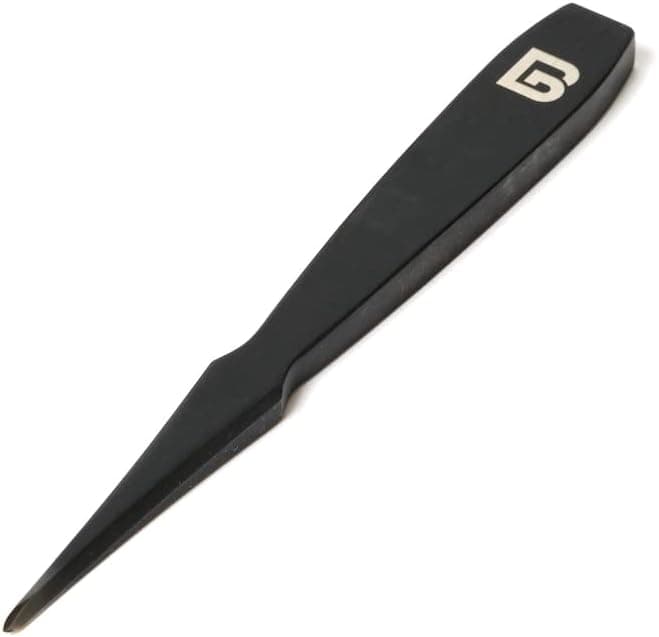
+ Olive/diamond tooth shape creates a refined stitch slant
From our guide: Best Pricking Irons for Clean, Slanted Saddle Stitches
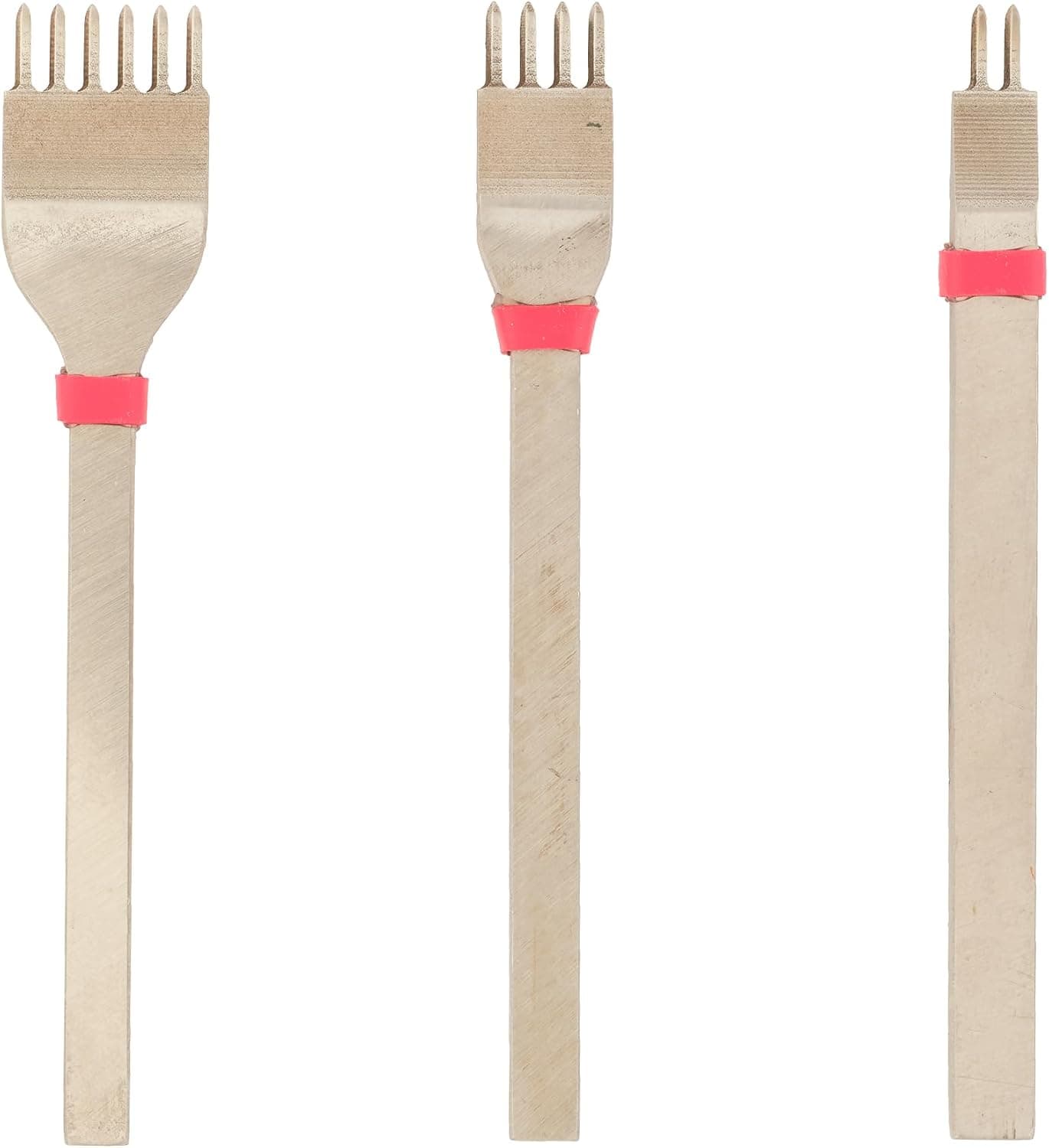
+ Precise 3mm spacing suits wallets and refined small goods
From our guide: Best Stitching Chisels for Hand-Sewn Leather Projects
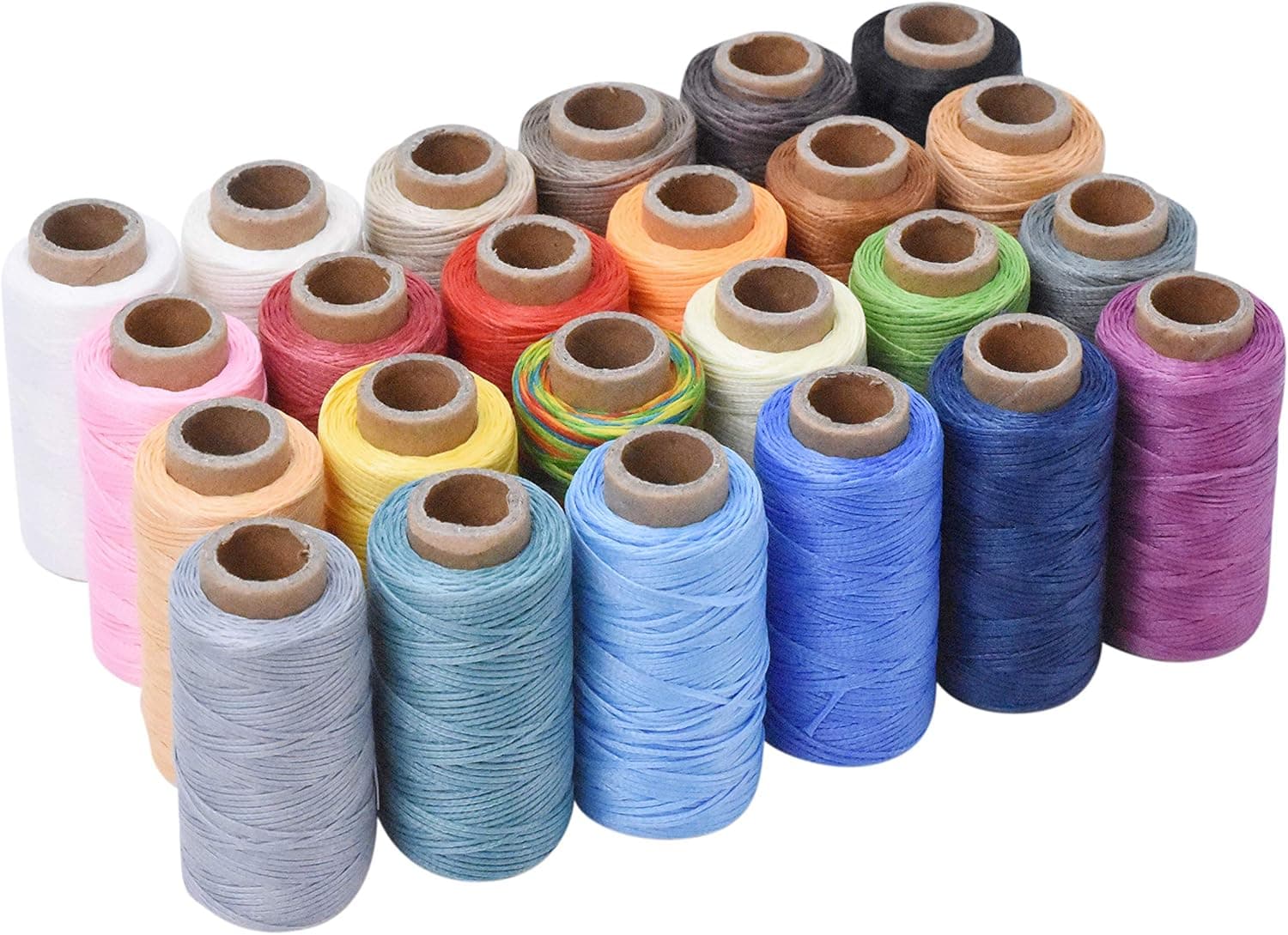
+ 24 colors let you match or contrast every leather shade
From our guide: Best Waxed Thread for Leather Stitching
+ John James is a classic English needle maker
From our guide: Best Leather Needles for Hand Stitching and Saddle Stitch
Popular right now
- Setting Rivets and SnapsArticle
- Hand Stitching vs Machine Stitching LeatherArticle
- Best Pricking Irons for Clean, Slanted Saddle StitchesBuying guide
- Best Gum Tragacanth and Burnishing Agents for Leather EdgesBuying guide
- How to Dye Leather EvenlyArticle
- Common Leathercraft Beginner Mistakes and How to Avoid ThemArticle
Based on the last 28 days of search and visitor data.