How to Fix Uneven and Crooked Saddle Stitches in Leather
Neat, even stitching is one of the details that makes handmade leather goods look professional. Beginners often find their stitch line wanders, stitches slant well on one side but not the other, or some stitches sit tight while others look loose. Most problems come from the prep work: marking, punching and holding the pieces steady. Improving those steps usually fixes stitching quickly.
Mark a straight stitch line
A wandering stitch line usually starts with inconsistent marking. Use a wing divider or stitch groover set to an even distance from the edge, and run it along the edge with steady pressure.
Make sure the leather edge is trimmed straight and flush before marking, since the divider follows the edge. For curves, move slowly and keep the tool perpendicular to the edge.
Punch holes consistently
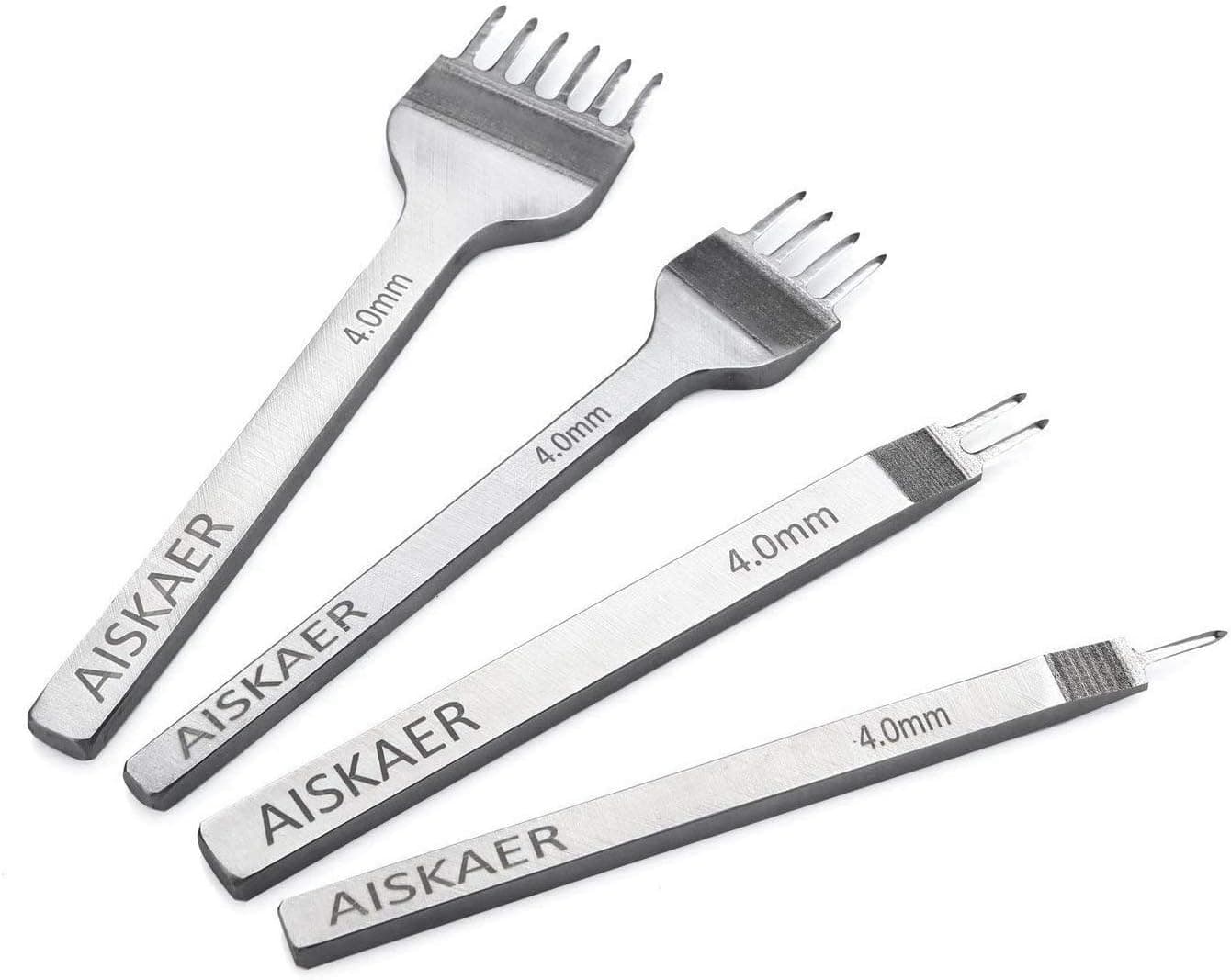
Hold stitching chisels or pricking irons vertically and strike evenly, keeping the chisel aligned with the marked line. Overlap one prong into the previous hole when moving along to keep spacing even.
Angled chisels create slanted stitches. If you are punching through several layers, ensure the exit holes on the back also follow a straight line, or holes may drift. A poundo board absorbs impact and helps create clean holes.
Use a stitching pony
Holding leather between your knees or in one hand makes consistent tension difficult. A stitching pony or clam clamps the leather securely and keeps both hands free.
Position the project so you can see the stitch line clearly and pull both needles with the same motion each time.
Keep a consistent stitching order
Saddle stitching looks best when needles always pass in the same order, such as the right needle first through each hole and the left needle following behind it. Changing the order creates stitches that slant inconsistently.
Some leatherworkers cast the thread around the needle before pulling it through to create a neat, even slant. Whatever method you use, repeat it consistently.
Apply even tension
Pull both threads with similar force after each stitch. Over-tightening creates puckering and pulls stitches into the leather, while loose stitches look sloppy.
Waxed thread holds its position once tightened, so pulling evenly after each stitch helps maintain a consistent appearance.
Finish and set the stitches
After stitching, lightly tap stitches with a mallet on a hard surface to flatten and set them. Running an overstitch wheel along the stitch line can also neaten the appearance.
Backstitch a few holes at the end and trim threads close. Carefully melt the ends of synthetic thread to secure them.