How to Make a Leather Watch Strap That Fits Your Watch and Your Wrist
Published How we research
A handmade watch strap is a satisfying small project, and it can transform a watch you already own. It is also less forgiving than a bracelet, because the strap has to match the lug width exactly, bend smoothly at the case and stay comfortable all day. Thin leather, a tapered shape and neat edges are what make a strap look professional. This guide covers measuring the lug width and your wrist, choosing a suitable thin leather, drafting and cutting the strap and keeper, punching the holes, finishing the edges and fitting the buckle and spring bars, with a few safety notes for working with small, sharp parts.
Products from this article
The highest-scoring picks from the buying guides this article links to. Scores are our editorial assessment, not customer ratings.
As an Amazon Associate we earn from qualifying purchases. This does not change our picks. Affiliate disclosure
New to Prime? Try Prime free for fast, free shipping on eligible items.
+ Same Osborne #67-1 pattern as the unavailable knife: a 4-1/8 inch by 1-1/2 inch blade with round beveled, hand sharpened edges.
From our guide: Best Leather Skiving Knives for Thin, Even Edges
+ Four sizes from 0.8 to 1.4 mm in one set cover watch straps, wallets and other thin to medium goods
From our guide: Best Edge Bevelers for Clean, Rounded Leather Edges
+ Neutral shade seals edges without changing color
From our guide: Best Leather Edge Paints for a Refined Finished Edge
+ Craftool line is widely used and easy to find blades for
From our guide: Best Leather Skiving Knives for Thin, Even Edges
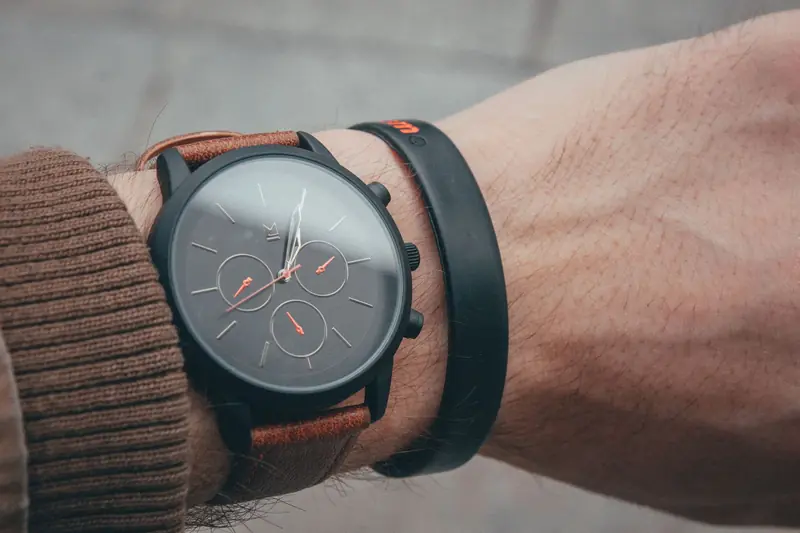
Measure the watch and your wrist
Measure the distance between the lugs, where the strap attaches to the case, because the strap's width at that point must match. Measure carefully with calipers or a precise ruler, and note whether the case has a curved or a straight gap.
Measure your wrist with a flexible tape, then work out the lengths of the two halves. A common layout has a shorter piece on the buckle side and a longer piece with holes, and the exact lengths depend on your wrist and the watch size.
Choose thin, supple leather
Watch straps need thin leather, often in a light weight, because thick leather is stiff against the wrist and hard to fit between the lugs. Many makers laminate two thin layers or use a thin top layer with a soft lining.
Calfskin and other fine leathers are popular, but a thin vegetable-tanned leather can work well if skived and conditioned. Choose a leather that is flexible and does not stretch too much, and check that it is comfortable against skin.
Draft the pattern with a taper
Most straps taper from the lug width down to a narrower width at the buckle end, which looks balanced and sits comfortably. Draw both halves on card, mark the hole positions and the buckle end, and check against the watch.
Cut the pattern, hold it against the watch and your wrist and adjust the lengths before you cut leather. Keep the pattern for future straps, noting the lug width and wrist size on it.
Cut the strap and keepers
Trace the pattern on the leather and cut with a very sharp knife against a steel ruler, in steady passes. A sharp blade is essential with thin leather, since it tears or wobbles easily, and keep your free hand well clear of the blade.
Cut small loops for the keepers from the same leather, and make them slightly wider than the strap so they slide on easily. Spare strips are useful for practice and mistakes.
Skive and shape the ends
Thin the area that wraps around the spring bar and the buckle, so the strap folds neatly without bulk. Our skiving article explains how to take leather down evenly without cutting through it.
Round or shape the tip of the long piece and the ends at the lugs to suit your design, and test-fit each piece to the watch before you go further.
Punch holes and prepare stitching
Mark the adjustment holes evenly and punch them with a small round or oval punch, on a firm backing and with a clean strike. Hole positions should give a range of fit around your wrist size, with the middle holes at your typical size.
If you stitch the edge, mark the stitching line with a groover or divider and use fine chisels or an awl. Thin straps need small stitches and fine thread, so test the stitch spacing on scrap first.
Finish the edges
Bevel and sand the edges, then burnish or paint them for a neat look. Thin leather can be hard to burnish, so a light touch and a little water or gum is usually enough, and edge paint can give a clean, uniform result.
Our edge finishing article shows the steps in detail, and good edge work matters more on a watch strap than almost anywhere, since it is visible and touches your skin.
Fit the buckle, keepers and spring bars
Fold the end of the buckle piece around the buckle bar and fix it with stitching or a small rivet, then slide on the keepers. Fit the strap to the watch with spring bars and a proper spring bar tool, which helps avoid scratching the case or losing the bar.
Spring bars are small and can fly off when released, so work over a tray or cloth and wear eye protection if you are not used to it. Check the bars are fully seated before wearing the watch.
Comfort, water and care
Wear the strap and check how it moves and where it rubs, then adjust holes or thickness if needed. Leather straps are sensitive to sweat and water, so take the watch off for swimming and showering, and let the strap dry naturally if it gets wet.
Rotate straps if you wear a watch every day, and wipe the leather clean with a dry cloth. If skin is irritated by dyes or finishes, stop wearing the strap and choose a different finish.
Test the fit before the final finish
Before you dye, seal or burnish the strap, assemble it dry and try it on with the watch. Check that the strap sits flat against your wrist, that the watch does not slide and that the buckle closes comfortably in the middle holes.
Small changes are much easier at this stage. Moving a hole, trimming a taper or thinning a fold costs little now, while the same change after finishing may leave visible marks. Record the final measurements for next time.
Common problems and fixes
A strap that feels stiff is usually too thick near the case, so skive the fold areas or choose a thinner leather next time. A strap that slips or twists often has a mismatched lug width or a keeper that is too loose.
Cracking along the holes suggests the leather was too thin or the holes were too close together, and it is worth remaking the strap rather than repairing it. Keep your measurements, because a second strap is faster and usually better than the first one.
Popular right now
- Setting Rivets and SnapsArticle
- Best Pricking Irons for Clean, Slanted Saddle StitchesBuying guide
- Best Gum Tragacanth and Burnishing Agents for Leather EdgesBuying guide
- How to Dye Leather EvenlyArticle
- Choosing Your First Leather KnifeArticle
- Hand Stitching vs Machine Stitching LeatherArticle
Based on the last 28 days of search and visitor data.