How to Get Into Leatherworking: Your First Project
Published Updated How we research
Leathercraft looks intimidating from the outside because finished work photographs so cleanly, but the skills underneath are surprisingly approachable. Almost everything you see in a handmade wallet or belt comes down to four operations: cutting leather accurately, punching stitching holes, sewing a saddle stitch, and finishing the edges. If you can learn those four things at a basic level, you can build most small goods. The craft rewards patience far more than talent, and a careful beginner with cheap tools will out-produce a rushed hobbyist with an expensive kit.
Products from this article
The highest-scoring picks from the buying guides this article links to. Scores are our editorial assessment, not customer ratings.
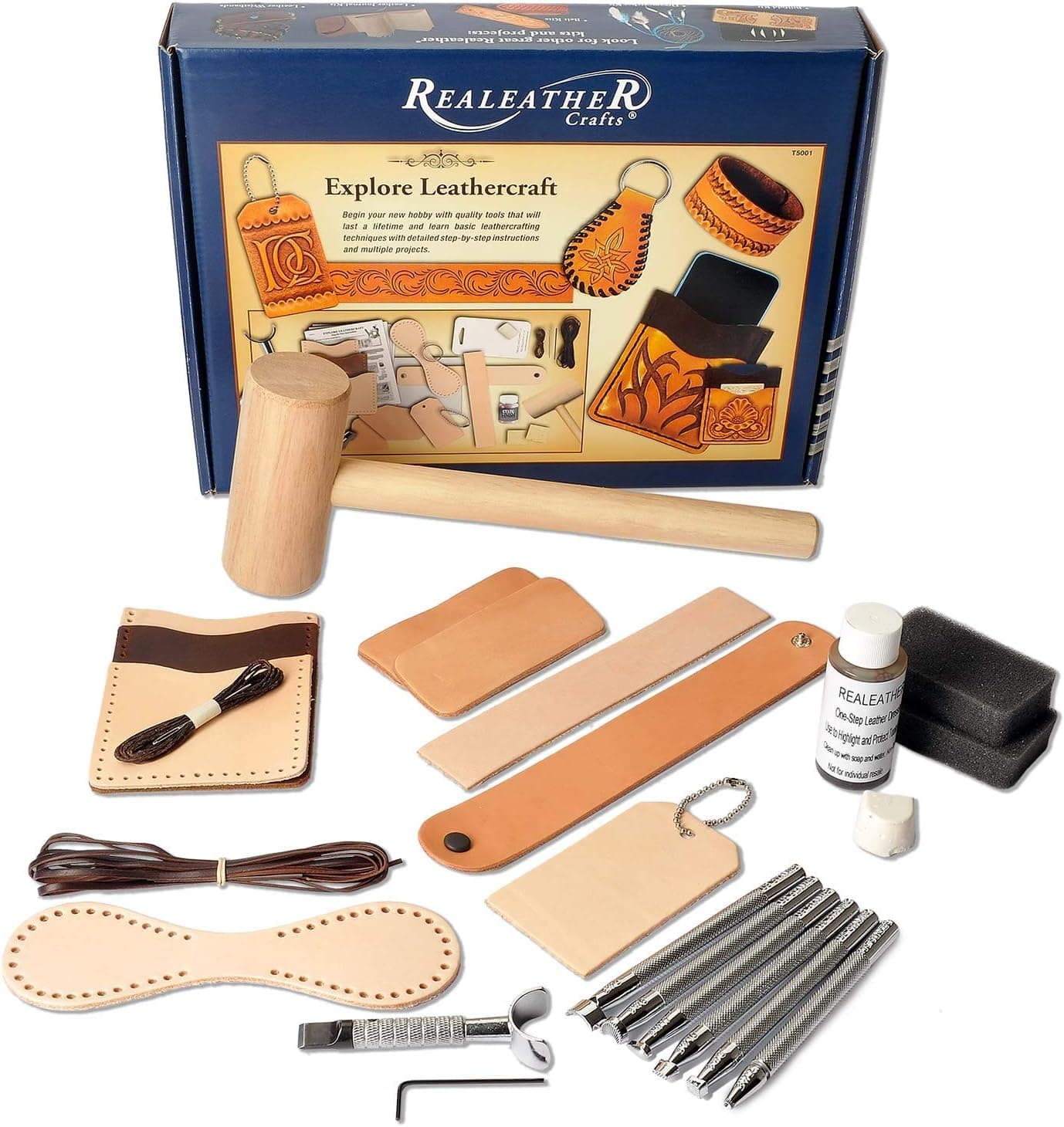
+ Tandy tools are a common starting point for new makers
From our guide: Best Leather Starter Kits for Beginners
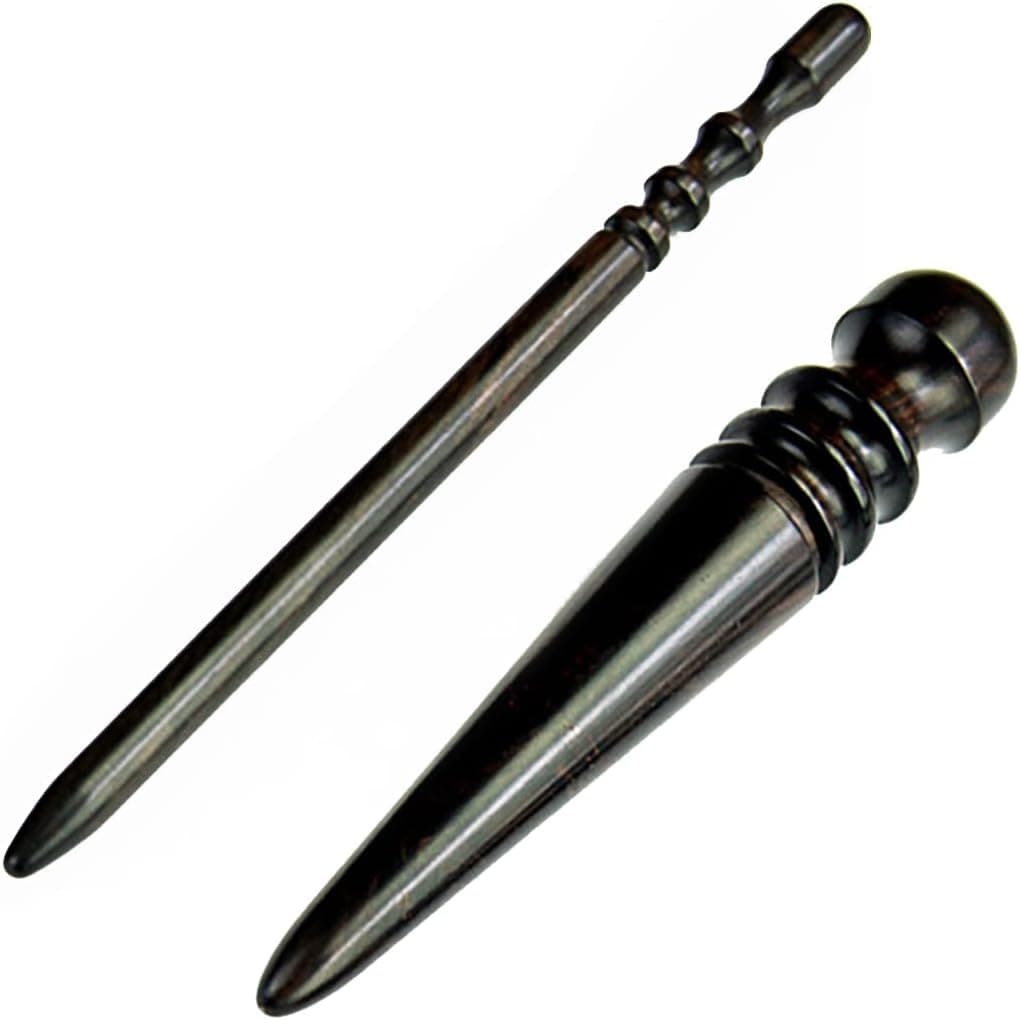
+ High density ebony polishes edges quickly
From our guide: Best Leather Edge Finishing Tools
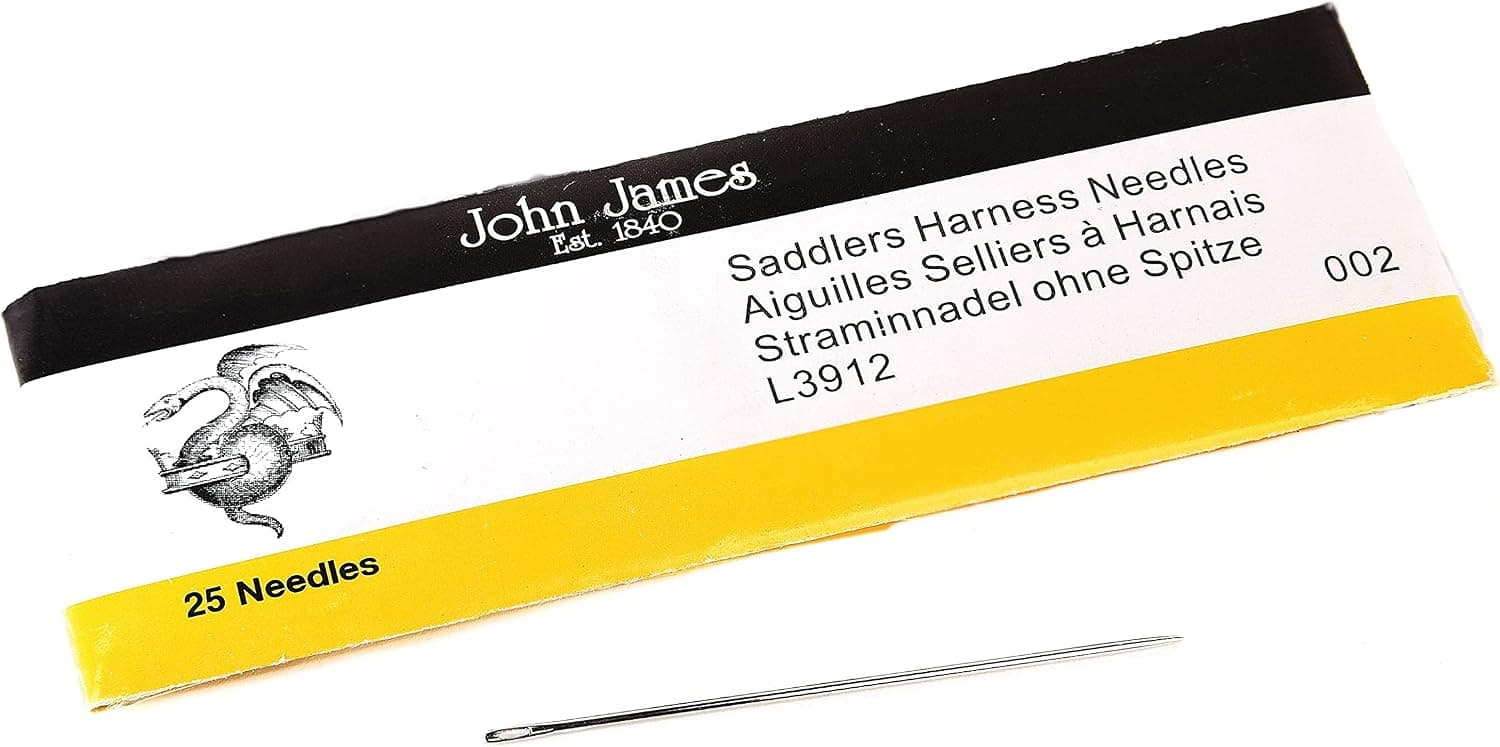
+ John James is a classic English needle maker
From our guide: Best Leather Needles for Hand Stitching and Saddle Stitch
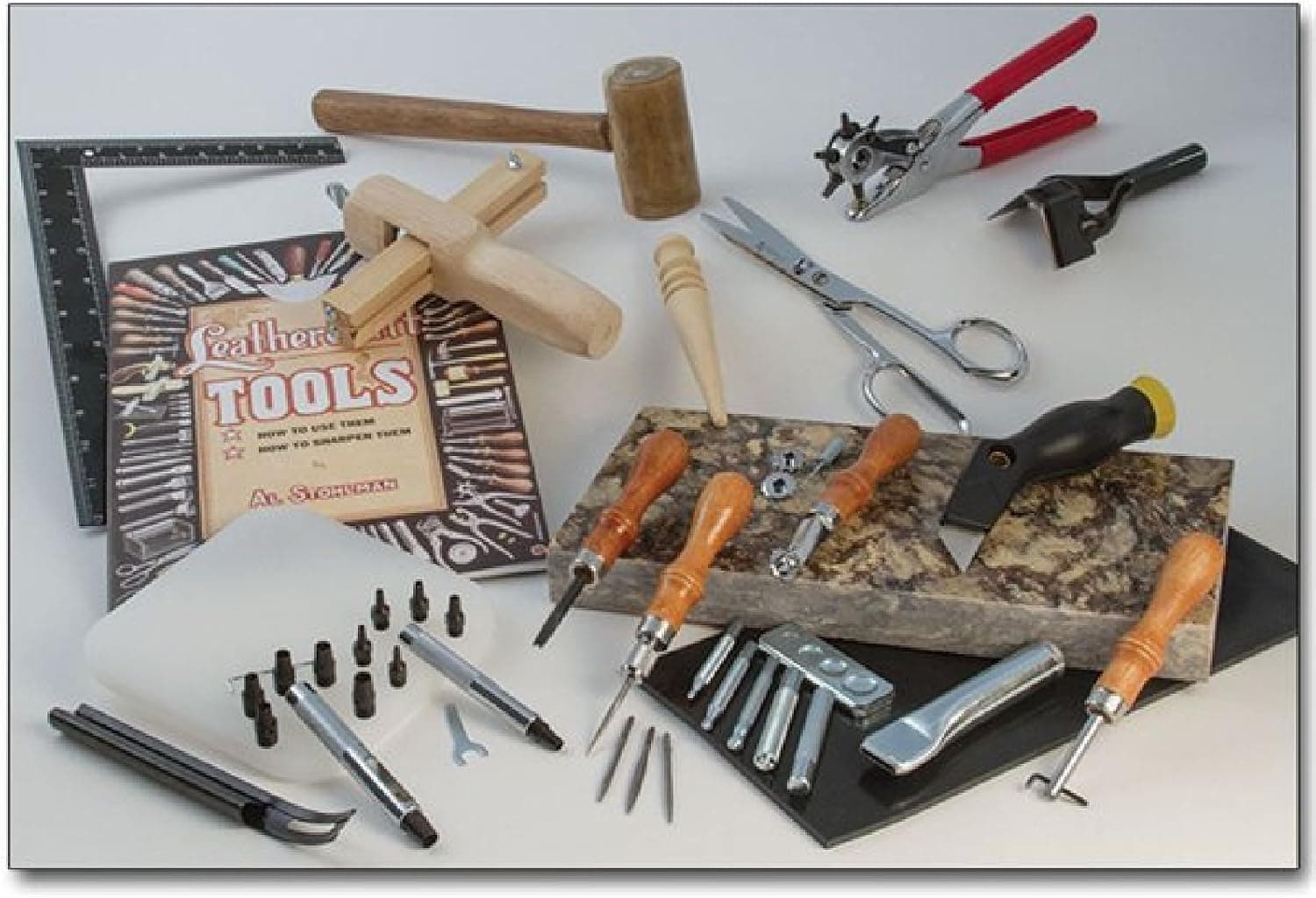
+ Waxed thread and stitching punches cover hand sewing
From our guide: Best Leather Starter Kits for Beginners
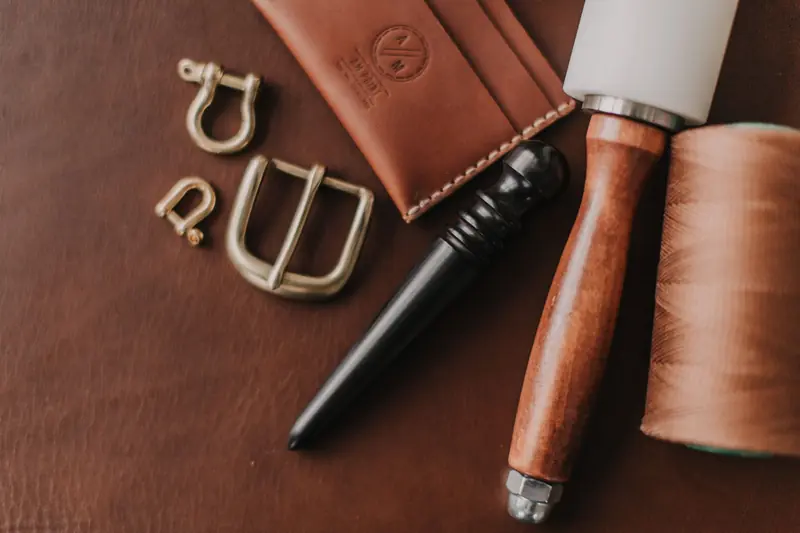
Start with vegetable-tanned leather in the 4 to 5 ounce range. Veg-tan is firm, holds a crease, burnishes well, and forgives mistakes because you can wet it, tool it, and dye it. A single shoulder or a bag of decent scrap panels gives you plenty of material to practice on before you commit to a full project. Avoid the ultra-cheap bonded leather sold in craft store bins; it is essentially leather dust glued to a backing and it will fall apart under stitching, which teaches you nothing except frustration.
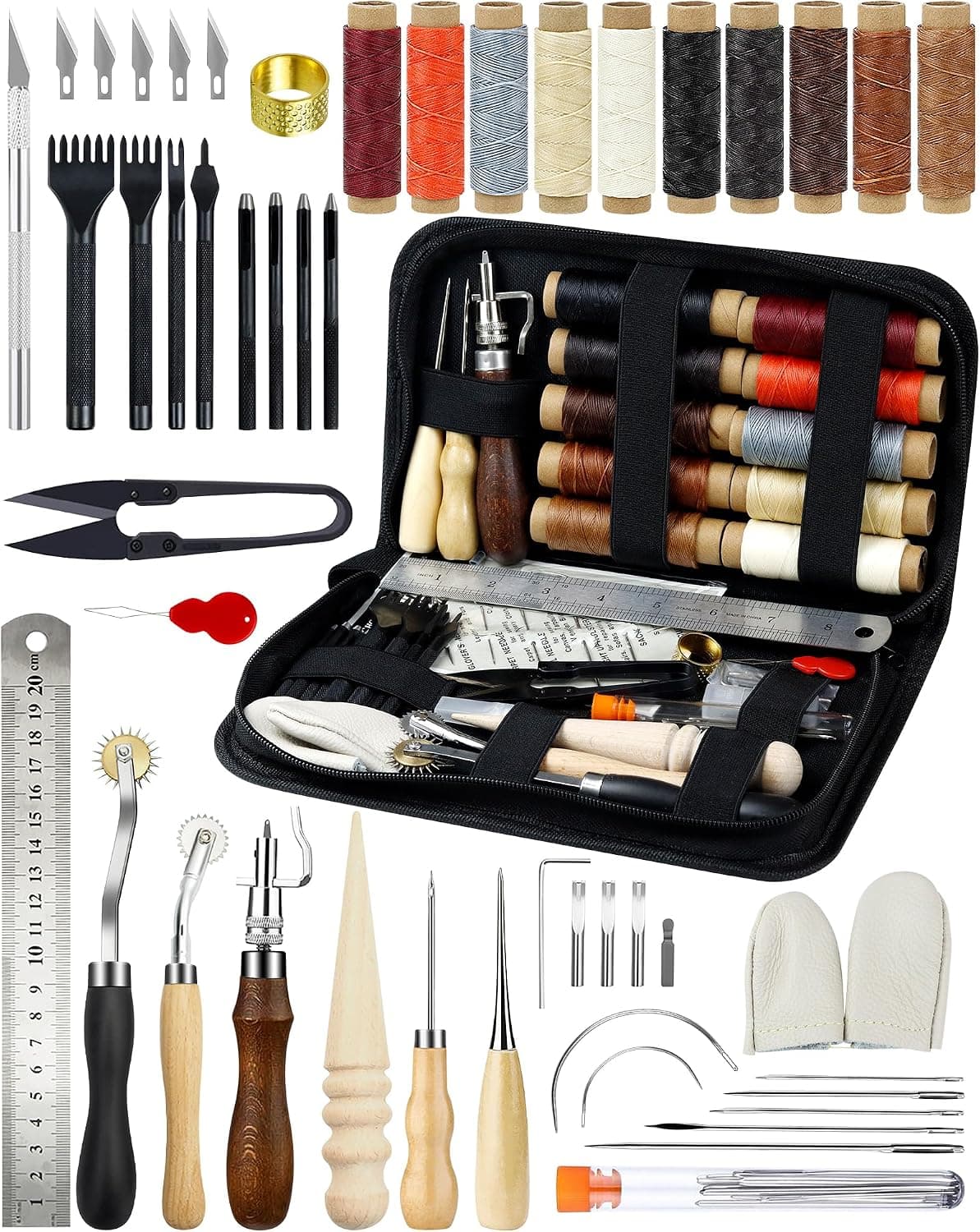
For tools, resist the giant 60-piece kits. You need a utility knife or a basic craft knife with fresh blades, a steel ruler, a cutting mat, diagonal stitching chisels in 3.85 mm or 4 mm spacing, two harness needles, waxed polyester thread, a bottle of contact cement or craft glue, and something to burnish edges with, even if that is just a piece of canvas and beeswax. A cheap poly mallet for driving the chisels rounds out the list. Everything here can be had for modest money, and each piece will still be in your kit years later.
Your first project should be a simple card holder: two or three rectangles of leather glued and stitched around three sides. It sounds almost too basic, but it forces you through the entire workflow. You will cut straight lines, glue panels without squeeze-out, punch holes that line up, saddle stitch a real seam, and burnish edges that people will actually touch. Every mistake you make on a card holder costs you a few square inches of scrap instead of half a hide.
Build a habit of slowing down at the two moments that decide how a piece looks: cutting and stitching. Cut with several light passes rather than one heavy one, and let the ruler guide the blade instead of your wrist. When stitching, keep your needle order and thread tension identical on every hole so the stitch line slants uniformly. Consistency, not perfection, is what makes handmade work look professional.
Finally, accept that your first pieces will be ugly, and make them anyway. Keep the first card holder you ever sew. Six months later, after a dozen small projects, you will pick it up and be shocked at how far your hands have come. Leathercraft is one of the few hobbies where measurable progress arrives that quickly, and where a beginner can produce genuinely useful objects within the first weekend.
Popular right now
- Setting Rivets and SnapsArticle
- Best Pricking Irons for Clean, Slanted Saddle StitchesBuying guide
- Best Gum Tragacanth and Burnishing Agents for Leather EdgesBuying guide
- How to Dye Leather EvenlyArticle
- Choosing Your First Leather KnifeArticle
- Hand Stitching vs Machine Stitching LeatherArticle
Based on the last 28 days of search and visitor data.